
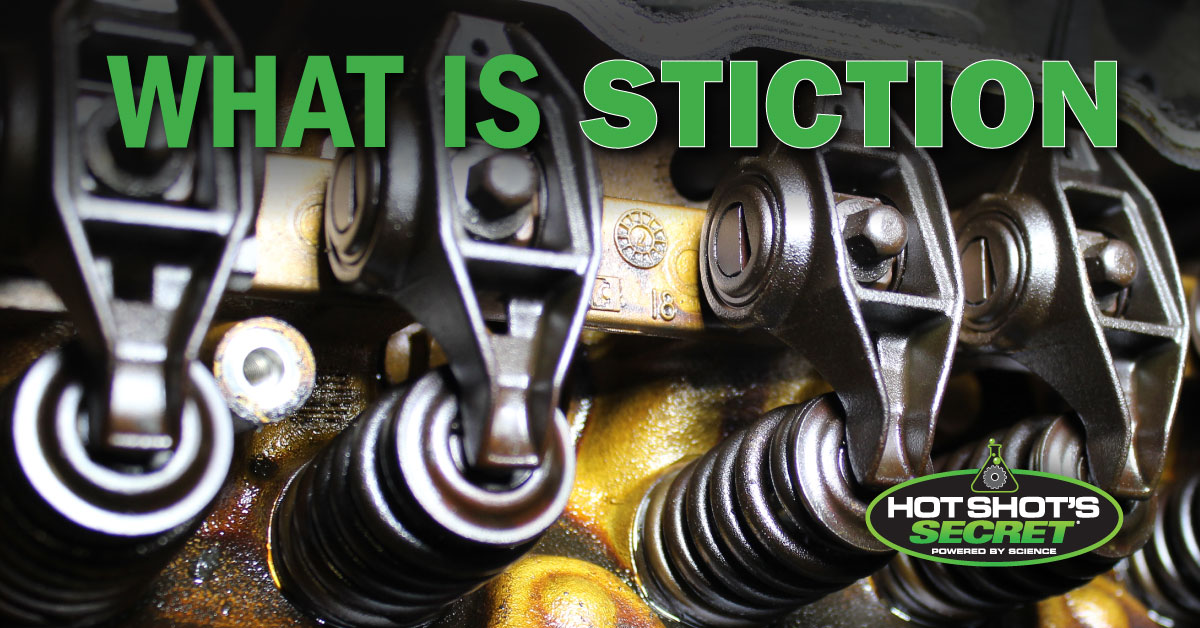
Stiction is static friction caused by sticky oil deposits that prevent engine components from moving freely. When oil oxidizes under heat, it forms varnish that bonds to metal surfaces, increasing resistance to movement. This sticky friction in engines prevents components from operating smoothly. Modern high-pressure diesel engines are increasingly vulnerable due to tighter tolerances and higher operating pressures, making the use of a high-quality oil additive more important than ever.
What Causes Stiction in Diesel Engines?
Understanding stiction vs. friction is critical. Unlike friction, which is resistance during motion, stiction is resistance to initial movement caused by chemical deposits. Friction is mechanical and expected. Stiction is chemical and preventable — deposit-induced resistance that cleaning can reverse.
Modern diesel engines face multiple stiction-causing conditions that didn’t exist decades ago. Understanding what causes injector stiction and engine stiction in general helps prevent permanent damage.
Oil Oxidation
Heat breaks down oil molecules. As oil oxidizes, it forms varnish and sludge that stick to metal surfaces, creating deposits that prevent components from moving freely. Oil stiction develops gradually as operating hours accumulate.
High Heat
Turbochargers operate at extreme temperatures environments with oil-exposed components often reaching 400°F or higher.
Extended Oil Change Intervals
Longer drain intervals mean more time for oil to degrade. Additive packages deplete, and detergents lose effectiveness. The oil that starts golden brown turns black and sticky.
Stop-and-Go Driving and Idling
An incomplete oil warmup allows moisture contamination. Short trips prevent oil from reaching optimal operating temperature, and prolonged idling keeps oil in localized hot zones, accelerating sludge formation in critical passages.
Stiction in Older HEUI Systems vs. Modern Common Rail Systems
The 6.0L and 7.3L Power Stroke diesel engines and their HEUI injector systems created widespread problems over 25 years ago. When HEUI injectors came into direct contact with engine oil, many failed as oil varnish began to build up inside, causing them to stick. Hot Shot’s Secret Stiction Eliminator was formulated to restore these “failed” injectors and prevent recurrence.
When common rail injection replaced HEUI, many assumed stiction had disappeared. It didn’t. Oil still oxidizes and adds sludge to a vehicle’s oil pumps, turbos and rings. Tighter tolerances mean once oil varnish builds, power and efficiency fade and eventually cause permanent damage to engine components.
Symptoms of Stiction in Diesel Engines
Recognizing diesel injector stiction and engine stiction early prevents permanent damage. Common symptoms include:
- Rough idle or hard cold starts (injector)
- Loss of power under load (injector)
- Poor throttle response (injector)
- Increased fuel consumption
- Turbo lag
- Injector hesitation
Stiction in diesel engines affects multiple systems simultaneously:
- Stuck rings reduce compression.
- Varnished turbo bearings increase friction and heat.
- Clogged oil passages starve components of lubrication.
Why Modern Diesel Engines Are More Sensitive to Stiction
Emissions standards demand micron-level precision. Higher injection pressures (30,000+ psi) require cleaner oil, and reduced sulfur in ultra-low sulfur diesel improves emissions but reduces lubricity. Longer drain intervals give oxidation more time to develop. A deposit that caused minor loss in older engines can trigger turbo failure in modern diesels.
Is Stiction Only an Issue for Diesel Engines?
Since high heat and high pressure create stiction in any engine that runs on fuel and uses oil as its lubricant, even gasoline engines develop stiction. Modern gasoline direct injection (GDI) engines face the same heat and pressure challenges as diesels.
Can Engine Oil Alone Remove Stiction?
No. Engine oil alone is generally insufficient to fully remove bonded varnish deposits once stiction has developed and cannot fully clean and restore lost efficiency. Once varnish bonds to metal, standard oil cannot dissolve it. Many competing products use harsh solvents that can damage the engine if not removed quickly enough.
How to Prevent and Remove Stiction
Prevention requires following OEM oil change intervals — adjusted for severe duty-use — using high-quality synthetic oil and adding an ester-based cleaner that dissolves varnish without harsh solvents.
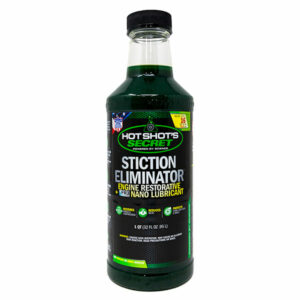
Hot Shot’s Secret Stiction Eliminator is a safe, effective synthetic cleaner that dissolves stiction and prevents future buildup. Blended with the company’s proprietary nano lubricant – FR3 Friction Reducer, Stiction Eliminator proven to reduce wear up to 62% more than engine oil alone in ASTM testing.
Unlike harsh solvent flushes, Stiction Eliminator is safe to leave in until your next oil change. It works in diesel and gasoline engines — including modern direct injection gas engines where stop/start systems create localized hot spots that accelerate oil breakdown. Any engine using oil can develop stiction. Protect yours with science-backed and evidence-based additive formulas designed to protect your vehicle.
Follow product label directions. Typical treatment rates include an initial dose of 4 ounces per quart of oil and a maintenance dose of 2 ounces per quart.
Eliminate Stiction and Protect Your Engine
Stiction reduces efficiency, increases wear and shortens engine life. Understanding what causes stiction allows you to prevent permanent damage, and controlling deposits can mean the difference between major repairs at 100,000 miles and trouble-free operation past 200,000. Place your order for Stiction Eliminator and shop our other additives to make engine upkeep easy.