
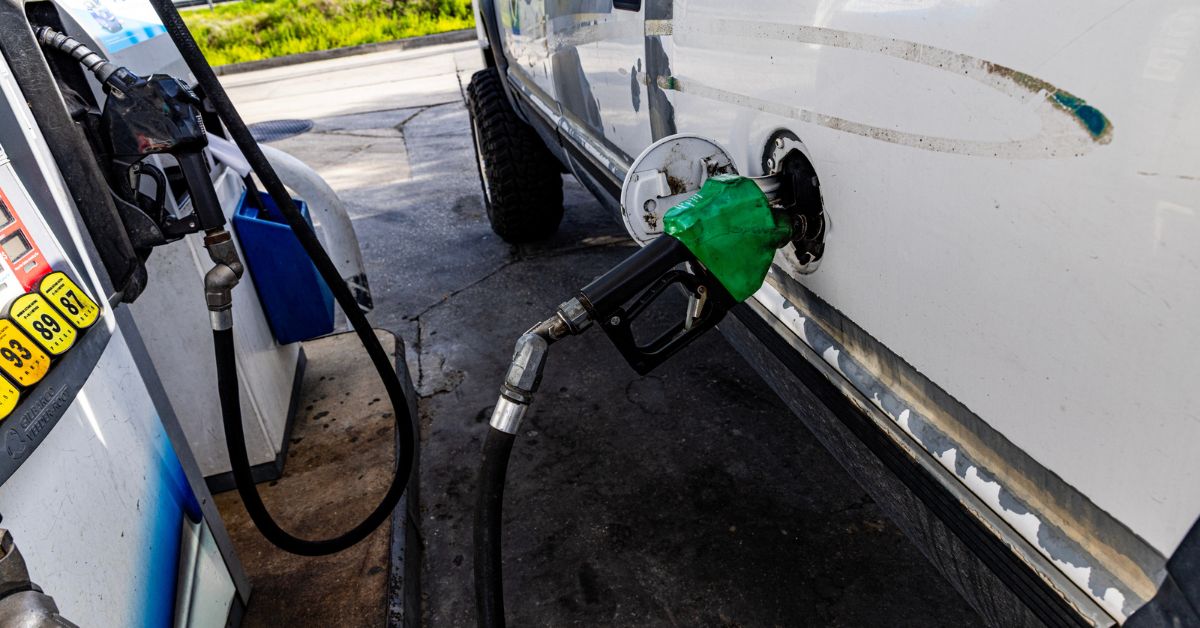
Most diesel drivers operate under a simple assumption — if it’s at the pump, it meets spec. They trust the gas station to sell quality fuel, but what’s available at the pump may not meet their standards.
The legal minimum for diesel fuel quality and what your engine actually needs are different. Federal law sets a floor, not a performance target, and that floor is low enough to create challenges for modern diesel engines, especially those equipped with high-pressure common-rail fuel systems.
How low your diesel fuel’s quality may be depends on cetane ratings, lubricity, contamination and how long that fuel has been sitting in the ground.
What Diesel Fuel Is Actually Required to Meet
In the United States, diesel fuel sold at the pump must meet ASTM D975 — the legal standard governing fuel quality. It must have a cetane rating higher than the minimum, which describes how quickly and efficiently the engine can ignite the fuel, and enough lubricity to control the wear scar, which is a physical indent or other damage left by moving parts when the fuel is not capable of protecting them from friction.
At the pump, fuel must meet these numbers:
- Cetane rating: The ASTM D975 minimum is 40, and most pump diesel in North America sits between 40 and 45. Keep in mind that diesel engines are designed to perform best on cetane ratings of 50 or higher, which means legal pump fuel can be 10 or more points below optimal combustion efficiency.
- Lubricity limit: Standards allow a maximum wear scar of 520 microns, measured using the ASTM D-6079 test method. However, the Engine Manufacturers Association (EMA) recommends a stricter standard of 460 microns that’s not legally required of fuel retailers.
The takeaway? Fuel can fully comply with required benchmarks and still fall short of what your engine’s manufacturer expects. It’s legal, but it’s not ideal, and over time, that gap adds up.
Why Ultra-Low Sulfur Diesel Is Harder on Your Engine Than the Old Stuff
Ultra-low sulfur diesel (ULSD) was mandated to reduce emissions. Sulfur content dropped from 500 parts per million (ppm) in older highway diesel to just 15 ppm in modern ULSD. That’s a win for air quality, but it changes how your fuel protects your engine by removing the natural lubricant.
Stripping sulfur also stripped the fuel of lubricity. Today’s ULSD is drier than the fuel that diesel engines were originally designed for. The moving parts inside your fuel pump and injectors — which rely on diesel itself for lubrication — are now running on fuel that offers less protection than before.
ULSD processing also removes oxygen and nitrogen compounds that contributed to lubricity. The result is a fuel that meets emissions standards but leaves fuel system components vulnerable to accelerated wear.
The CP4 Pump Challenge
The Bosch CP4 high-pressure fuel pump used in many late-model diesel trucks, including the Ford 6.7L Power Stroke and GM 6.6L Duramax, was designed for fuel with a wear scar around 460 microns. U.S. pump diesel frequently delivers 500 microns or worse. That gap can accelerate wear inside the pump. When the pump fails, metal shavings circulate through the entire fuel system, often requiring complete injector replacement along with the pump. Industry repair estimates range from $6,000 to $10,000 for this type of system-wide contamination.
Real-World Diesel Quality and What Testing Actually Shows
According to Engine Builder Magazine testing, some fuel samples failed to meet even the 520-micron ASTM limit — meaning some diesel fuel at the pump doesn’t legally meet minimum standards. Almost none of the untreated fuel samples tested met the stricter 460-micron EMA recommendation.
Cetane ratings also vary by region and season, as summer-blended diesel can differ significantly from winter blends. Refinery sourcing, regional demand and blend formulations all affect what ends up in the underground storage tank.
Then there’s the tank itself. Diesel at a high-volume truck stop with fast turnover is not the same as diesel sitting in a low-volume station’s underground tank for weeks. Stale fuel degrades. Water intrusion is real. Microbial growth — often called “diesel bug” — can form when bacteria and fungi colonize the fuel, creating sludge that clogs filters and damages injectors.
Biodiesel blends add another variable. B5 and B20 blends can affect cold-flow properties and oxidation stability depending on the base stock quality. Blend consistency varies widely from station to station, and biodiesel is notoriously hygroscopic — it attracts and retains water, which accelerates both corrosion and microbial contamination. Higher biodiesel percentages also have shorter shelf lives than conventional diesel, meaning older fuel degrades faster.
What Happens Inside Your Engine When Fuel Quality Is Low
Low cetane leads to:
- Harder cold starts
- Rough idle and hesitation under load
- Increased combustion noise (diesel knock)
- More black smoke
- Reduced power output and fuel economy
- More frequent DPF regeneration cycles
Low lubricity leads to:
- Accelerated wear on fuel pump internals (especially CP4 pumps)
- Injector tip wear and inconsistent spray patterns
- Metal particles circulating through the fuel system
- Premature injector failure
- Catastrophic pump failure with no warning
Contamination, water and microbial growth lead to:
- Clogged fuel filters
- Injector deposits and scoring
- Fuel system corrosion
- Microbial sludge buildup in the tank
The One Thing Diesel Drivers Can Control
You don’t choose the refinery, the tanker truck or the station’s storage conditions. However, you can choose what you add to your tank at every fill-up. That’s where a quality fuel additive makes the difference.
The right formula compensates for the variables you can’t see:
- Restores the lubricity that ULSD is missing
- Raises cetane to where your engine actually performs
- Cleans out deposits before they cause damage
- Protects against water and microbial contamination
- Keeps your system stable between fill-ups
Using a diesel fuel additive at every fill-up is one of the easiest ways to improve diesel fuel quality and protect your engine from the shortcomings of pump fuel.
Why Diesel Drivers Choose Hot Shot’s Secret
Hot Shot’s Secret builds its fuel additives around the gaps in pump diesel — not what marketing says fuel should be, but what testing shows it actually is. Every product is Powered By Science and backed by the industry’s best money-back guarantee.
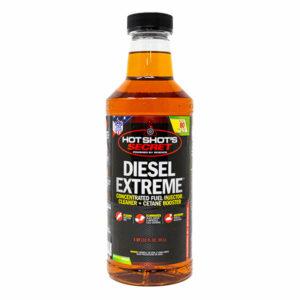
- Diesel Extreme: This deep-cleaning additive removes the internal injector deposits (IDIDs) that accumulate when you burn low-quality fuel over thousands of miles. It contains the most concentrated detergent formula on the market and boosts cetane up to seven points when used every 6,000 miles.
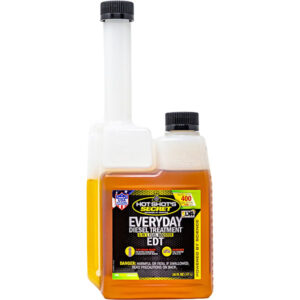
- Everyday Diesel Treatment (EDT): The everyday fix is formulated with LX4 Lubricity Extreme. EDT raises fuel lubricity by up to 28%, bridges the cetane gap at every fill-up, disperses moisture and keeps injectors clean. Use at every fill-up.
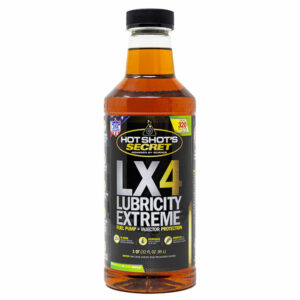
- LX4 Lubricity Extreme: Get maximum pump protection with reduced wear scar. This product is the answer for CP4-equipped trucks and anyone running high-mileage cycles on ULSD.
- EDT+ Winter Defense: We’ve formulated this additive specifically for cold climates. It offers everything EDT does, plus wax modifier and deicer protection to -40°F.
Enhance Your Engine With Hot Shot’s Secret Fuel Additives
Pump diesel is a variable you can’t control. What you add to it isn’t. That’s how to improve fuel quality — and protect your investment in the process. Whether you’re running a work truck, towing a trailer, or operating farm equipment, consistent fuel treatment is the most cost-effective insurance against expensive repairs.
Shop Hot Shot’s Secret fuel additives today.