If you drive a 6.7L Power Stroke®, DEF quality isn’t just an emissions checkbox — it’s the difference between your truck running smoothly and one that throws codes, forces a derate and leaves you stranded. Crystallized DEF and contaminated fluid cost Power Stroke owners more in injector replacements and diagnostics than almost any other issue.
The best DEF fluid for Ford Power Stroke trucks actively protects your SCR system while meeting ISO 22241 and API certification standards.
How the 6.7L Power Stroke SCR System Works
Every 6.7L Power Stroke since its 2011 introduction injects DEF upstream of the SCR catalyst, controlled by two NOx sensors — one upstream and one downstream of the catalyst — that let the PCM verify the catalyst is truly converting NOx instead of just assuming it based on dosing rate alone. DEF tank capacity ranges from 5 to 7.5 gallons, with consumption around 1% to 3% of diesel fuel usage.
Three Generations of the 6.7L Power Stroke
Ford has released three generations of the 6.7L Power Stroke, each with its own DEF system characteristics:
- 2011–2014: First-generation trucks had the highest rate of DEF-related sensor and injector failures, leading to Ford service bulletins and Customer Satisfaction Programs.
- 2015–2019: Second-generation models improved DEF heater reliability and NOx sensor durability.
- 2020+: Third-generation trucks come with updated SCR catalyst designs and refined DEF dosing logic, but owners still report P20EE and P207F codes when DEF quality drops below spec.
DEF Tank Size and Typical Consumption Rate
Most 6.7L Power Stroke Super Duty trucks hold 5 to 7.5 gallons of DEF. Under typical driving conditions, a gallon of DEF lasts roughly 700 to 1,000 miles, though heavy towing, extended idling and high-speed highway driving increase consumption. You’ll get a low-DEF warning around 500 miles of remaining range.
Common DEF/SCR Issues by Generation
NOx sensor failures were a problem in the 2011–2012 first-generation trucks. The issue was significant enough that Ford issued Customer Satisfaction Program 12B33 specifically to replace NOx sensors and upgrade the SCR system on affected trucks. Across all generations, owners most often report DEF-specific codes:
- P20B9 (reductant heater A control circuit/open)
- P203F (reductant level sensor)
- P20EE (SCR NOx catalyst efficiency below threshold)
- P207F (reductant quality performance)
P20EE and P207F are the two codes owners encounter most often.
2011 to 2012 Power Stroke Trucks
These trucks experienced NOx sensor element failures at such high rates that Ford issued Customer Satisfaction Program 12B33, which included PCM and NOx module reprogramming, plus NOx sensor replacement.
DEF Injector (Dosing Valve) Clogging
DEF injector crystallization is one of the most common DEF problem that Power Stroke owners report. When evaporation, heat exposure or loose caps cause water loss, urea concentration becomes stronger than its usual 32.5%. The higher urea content creates crystalline deposits that form in the injector nozzle, tank outlet and supply lines — the exact components behind most of the codes listed above.
DEF Heater Failure and Cold-Weather No-Thaw Issues
DEF freezes at 12° Fahrenheit. Your Power Stroke DEF system includes a tank heater and pump heater module to thaw the fluid before injection, but if that heater fails, your truck will throw P20B9 or P203F codes. Exposure to freeze-thaw cycles affects the DEF, causing concentration issues that trigger the quality sensor.
How to Tell If It’s the Sensor or the Fluid
With the engine warm at idle, the upstream NOx sensor should show around 100 to 300 ppm. If the SCR catalyst is doing its job, the downstream sensor should read much lower, typically 20 to 50 ppm. If the downstream and upstream readings match, the cause is either a poisoned catalyst, a non-dosing injector or degraded/contaminated DEF — not necessarily a bad injector, which often gets replaced unnecessarily.
Half of DEF system comebacks at diesel shops happen because technicians replace the DEF injector without checking the NOx sensors. The injector is easy to get to and replace, so it becomes the first guess. But if your downstream NOx sensor sends inaccurate readings, a new injector won’t fix a thing.
What to Look for in a DEF Fluid for Your Power Stroke
The jug you grab at the pump station matters. Two nonnegotiable standards separate protective DEF from the cheapest option on the shelf.
API Certification and ISO 22241 Compliance
The best DEF fluid for Ford Power Stroke 6.7L trucks meets ISO 22241 standards and carries the API Certified Diesel Exhaust Fluid seal. This confirms the fluid has 32.5% high-purity urea and 67.5% deionized water. Don’t trust self-declared compliance. Always look for the API seal on the jug.
Triple Filtration and Contamination Resistance
Lower-quality DEF often isn’t filtered or handled well enough to prevent contamination before the fluid reaches your tank. Triple-filtered DEF removes particulates, dust and microscopic debris that can accelerate crystal formation and abrade system components.
Why Hot Shot’s Secret Ultra Premium DEF™ Is Built for Power Stroke Owners
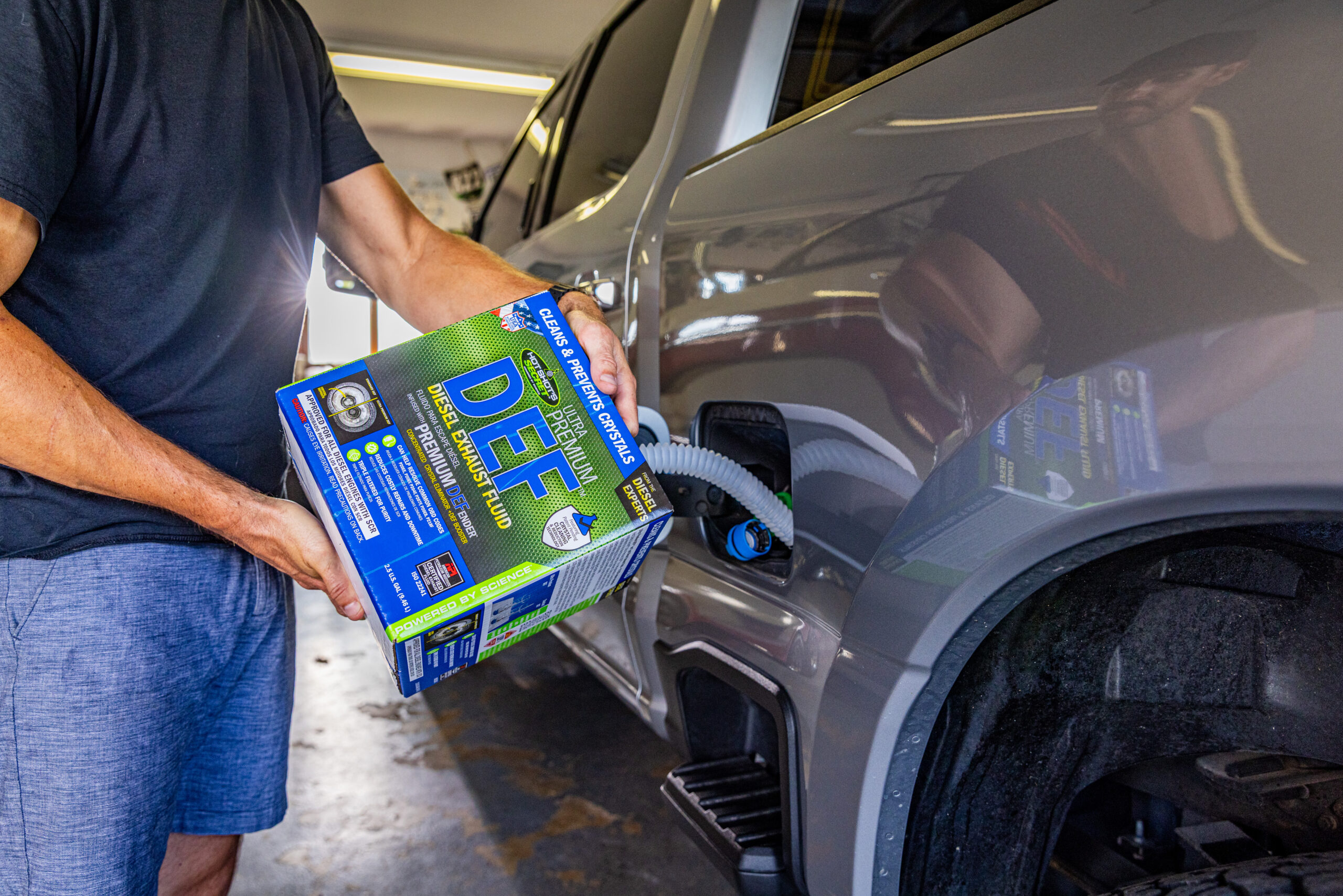
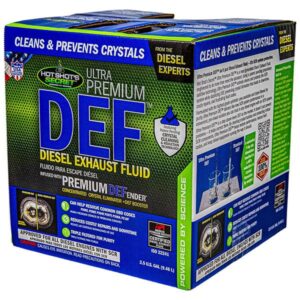
Standard DEF only meets the minimum ISO 22241 specifications, which means it won’t actively protect your SCR system from crystallization and deposit issues that can lead to P20EE, P207F and injector clogging. Hot Shot’s Secret Ultra Premium DEF™ uses patent-pending proprietary additive technology to stabilize DEF, prevent crystal formation and actively clean existing deposits from the injector, supply lines and tank outlet.
Actively Cleans Injector and Line Deposits, Not Just Prevention
Ultra Premium DEF does more than slow crystal buildup — it wets the crystal surface to dissolve existing deposits back into the fluid. If deposits are forming in your diesel SCR system, this fluid helps clean them while it protects. It is formulated with the highest-grade synthetic urea available and triple-filtered for purity, so you get API-certified, ISO 22241-compliant DEF that actively maintains cleaner system operation over time.
Helps Reduce P20EE, P207F and Related Trouble Codes
Hot Shot’s Secret Ultra Premium DEF helps clear SCR and DEF codes, like P20EE (SCR catalyst efficiency below threshold), P207F (reductant quality performance), P204F (reductant system performance), P20E8 (reductant pressure too low) and P218F (reductant no flow detected). Used as directed, it boosts SCR system reliability and reduces the risk of derate events and no-start conditions from inferior DEF.
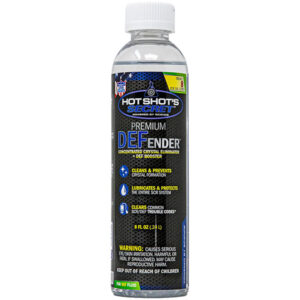
You can get the same patent-pending technology in concentrated form as Premium DEFender, which you add directly to your DEF tank at refill. Both are safe for SCR systems and won’t void your OEM warranty if used as directed.
Features of Hot Shot’s Secret Ultra Premium DEF:
- API-certified
- ISO 22241 conforming
- Triple-filtered for purity
- Uses patent-pending technology to help prevent crystal formation
- Cleans existing buildup
- Protects your entire SCR system
While Ultra Premium DEF protects your emissions system, your fuel system also needs attention. Use Diesel Extreme every 6,000 miles to deep clean your injectors and Everyday Diesel Treatment at every fill-up to boost cetane, improve lubricity and maintain peak performance.
FAQs
Common DEF questions answered.
How often do I need to refill the DEF tank on a 6.7L Power Stroke?
6.7L Power Stroke owners refill DEF every 3,000 to 5,000 miles under typical driving conditions, though heavy towing and extended idling increase consumption. You’ll get a low-DEF warning around 800 miles of remaining range.
Is my NOx sensor covered under Ford’s emissions warranty?
Federal emissions warranty covers SCR-related components, including NOx sensors, for five years or 50,000 miles (light-duty) and five years or 100,000 miles (medium-duty). Some 6.7L Power Stroke trucks may also qualify for extended NOx sensor coverage under Ford Customer Satisfaction Programs 12B33 and 18M04.
Can bad DEF actually cause a false NOx sensor reading?
Yes. Degraded or contaminated DEF can make the downstream NOx sensor read higher, even when the sensor is fine. If the SCR catalyst isn’t converting NOx efficiently (due to bad DEF quality), the downstream sensor will report high NOx levels and the PCM will set a P20EE code. Replacing the sensor won’t fix the problem if bad DEF is the issue.
Protect Your Power Stroke SCR System Before Codes Appear
Actively managing DEF quality helps prevent crystallization and deposit formation. Hot Shot’s Secret Ultra Premium DEF is engineered to tackle the root causes.
Order Hot Shot’s Secret Ultra Premium DEF today and drive with the confidence of a money-back guarantee.