
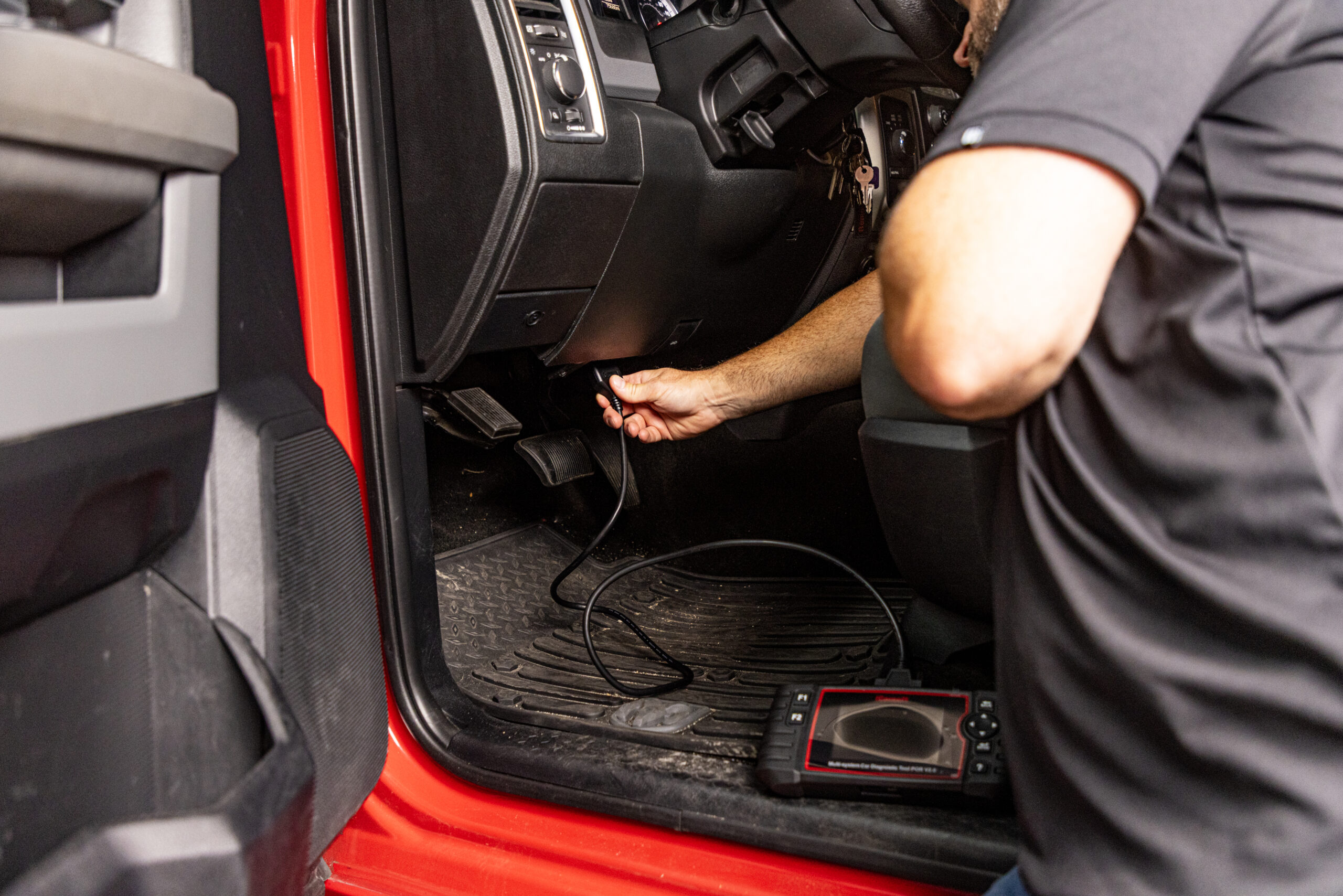
You have a diesel exhaust fluid (DEF) warning light, a scan tool in hand and absolutely no idea what any of the readings mean. Learn the common DEF fault codes and how you can address each one.
The Sensors and Components Behind Every DEF Fault Code
From the NOx sensors to the injector, the codes we discuss in this piece trace back to one of these subsystems.
How the NOx Sensors Measure Catalyst Efficiency
The two NOx sensors in your exhaust system measure the SCR’s efficiency. The upstream sensor, located before the SCR, reads the NOx level in the exhaust before entering the SCR system, while the downstream sensor measures NOx after passing through the catalyst. They work together to feed data to the ECU, allowing it to compare the readings to determine the catalytic converter’s efficacy.
The In-Tank DEF Quality Sensor and How it Estimates Concentration
The in-tank sensor uses a dielectric or refractive-index-style measurement to estimate the concentration of urea. This sensor is designed to determine whether the urea-to-pure-water ratio meets the requirement of 32.5% urea with 67.5% deionized water.
The Dosing Module and Injector
The dosing and pump units operate as a single unit to pressurize DEF drawn from the tank. While they function as one, they have two different failure modes. Pump issues often manifest as pressure and delivery faults, while injector problems are characterized by poor spray quality or circuit issues.
P20EE: Efficiency Is Below Threshold
The P20EE code is triggered when the ECU determines that the catalyst is not reducing the NOx efficiently.
What Causes the P20EE Code?
There are three common causes of an underperforming catalyst:
- Degraded catalyst: The catalyst has reached the end of its life and can no longer adequately convert NOx. The fix is often expensive because it requires a replacement.
- Fouled or crystallized injector: When deposits build up on the injector, they can degrade the spray pattern, preventing the DEF from atomizing into a fine, even mist. Poor atomization of urea means it does not fully thermally decompose before entering the catalyst, so there will not be enough ammonia to neutralize the NOx.
- DEF concentration drift: If the concentration of DEF has degraded or is contaminated, then the actual ammonia yield per dose changes, even with a perfectly functional dosing module.
Symptoms and Diagnosis
Since there could be several causes of the P20EE code, a diagnostic approach is required. One of the first symptoms you will notice is a check engine light, often followed by reduced engine power, ensuring that your truck doesn’t continue emitting high NOx levels.
If the problem is crystallization on the injector, a premium fluid may help. But if the problem is with the catalyst, you may need professional assistance.
P204F: Reductant System Performance
The P204F DEF fault code is not related to a single component, like the P20EE. This code addresses the overall performance of the reductant system.
What Causes the P204F Code?
This code usually results from a persistent performance issue detected by the ECU. Some of the causes include:
- Incorrect, contaminated or low DEF: Using the incorrect or diluted DEF in your truck will persistently yield low NOx conversion rates.
- Defective dosing valve: Like the P20EE code, the P204F can be triggered by a clogged injector that fails to create the correct spray pattern.
- Problems with the reductant pump or lines: The pump pushes DEF through the system, while the lines deliver it, and a clog or weak pump can prevent proper delivery and pressure.
Later vehicle models may pair P204F with a companion code to help simplify diagnosis.
How to Fix It
Start with smaller fixes like checking the fluid quality. This option is the fastest and cheapest to rule out. If the light persists or the fluid is fine, inspect the dosing line for pressure issues. If you have a companion code, ensure you diagnose and repair it.
P207F: Reductant Quality Performance
This code is a true DEF warning light. P207F centers on exhaust fluid quality, making it the easiest to resolve.
What Causes the P207F Code?
A major cause of the P207F code is an in-tank quality sensor reading that falls outside the mandated 32.5%. The causes behind this code include DEF contamination, which affects quality, and degradation from heat exposure.
Why Fluid Quality Is the Most Common Cause
Most codes in this piece rely on a sensor failure, crystallization or a component wearing out. The P207F can be triggered by everyday factors like heat or air exposure. DEF degradation is common and can result from simple handling mistakes. With the tolerance band also very tight, even the slightest evaporation can shift the spec outside the margin.
However, it is the easiest, fastest and cheapest code to fix. Drain the tank and rinse it out with deionized water before refilling. You should also follow any additional manufacturer recommendations for cleaning and handling. Remember that the type of fluid you choose matters, so purchase an ISO 22241-compliant fluid designed to help you align with emission regulations.
P20EF: SCR NOx Pre-Catalyst Efficiency Below Threshold
Much like the P20EE, the P20EF flags SCR performance issues. But P20EF specifically focuses on efficiency at the pre-catalyst stage. This code is triggered when the ECU determines that the NOx conversion efficiency is below the threshold. Having this pre-catalyst measurement makes it easier to pinpoint whether a problem is occurring before the exhaust can reach the main catalyst.
What Causes the P20EF Code?
Several causes include:
- Crystallized deposits: Much like with P207F and P20EE, crystallization can cause the P20EF flag.
- DEF quality issues: Poor DEF will fail to yield the required ammonia levels.
- Faulty sensor: The sensor itself may be degrading and providing inaccurate readings.
How to Fix It
If the problem is due to crystallization or quality issues, an additive could be the answer. Most of these products are designed to help clean the system and restore functionality. When the trigger is hardware-related, you may need component-level repair or replacement.
Other Related SCR/DEF Codes: P20E8 and P218F
These two round off our list of codes:
P20E8: Reductant Pressure Too Low
This warning shows up when the DEF pump can’t build or maintain the required pressure to dose the fluid correctly. Some common causes are a weak or failing pump, a leak in the pressure feed line or a clog. Crystallization also plays a role here, as it is a common cause of clogs in the exhaust system.
P218F: Reductant No Flow Detected
The P218F goes beyond low pressure. When you notice this code, it means the ECU commanded the DEF dose, but no flow was detected. Reasons behind no flow include an empty tank, a fully blocked line, a pump failure or wiring issues in the pump or flow sensor.
From fluid quality to crystallization and basic delivery system health, both of these codes, much like all the other codes in this piece, can be traced back to a handful of root mechanisms.
How to Diagnose DEF Fault Codes
To start diagnosing any DEF fault codes, you will need to ensure that you have the right tools. Use a scanner capable of reading manufacturer-specific codes and not just generic codes to ensure you have accurate readings.
- Pull the records: Plug the scanner into your vehicle’s OBD-II port. Pull and record all the codes present. Ensure that your records include the companion codes as well for a clear overview of the issue. The more codes present, the faster it may be to determine the root cause.
- Visual and physical checks: Check the DEF quality and level first, since issues with this fluid are connected to multiple fault codes. Ensure the tank is not low and that there are no contaminants in the fluid. Inspect for white, crusty deposits on the injector, nozzle and the filler cap. These often point to a crystallization problem.
- Component-specific checks: If the fluid and crystallization checks are clear, move on to component inspections based on the code on your scan. A P204F may require replacement of the dosing valve, while a P20EE may require catalyst replacement. Remember that simple fixes like refilling DEF are DIY tasks, but anything requiring electrical work is best left to the professionals.
- Run a full drive cycle: Once you or a technician has cleared the codes, run a full drive cycle to ensure the problem is fixed.
How to Prevent DEF Fault Codes from Coming Back
There are several simple strategies you can implement to reduce the recurrence:
- Use high-quality, certified DEF fluid: When shopping for DEF fluid, ensure you choose a brand that is both ISO 22241-compliant and API-certified. Fluids with these specs meet both national and international standards for quality, handling and transport, giving you more room to stay within the margin.
- Store it well: Don’t leave your fluid exposed to extreme heat or in contact with contaminants that can degrade it. Even with premium fluid, poor storage can still lead to issues.
- Practice regular SCR system maintenance: Regularly check your system for visible crystallization symptoms. Catching these early can be a couple of dollars to fix, but left unattended, repairs can cost much more.
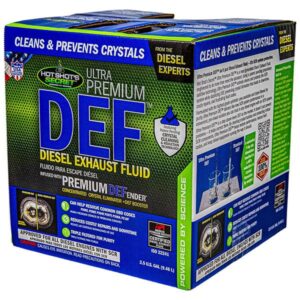
Try Hot Shot’s Secret Ultra Premium DEF Fluid™
Ultra Premium DEF Fluid™ is our take on what DEF should be. Instead of another commodity DEF, we formulated this product to actively help protect the SCR system. It is triple-filtered for purity and features the highest-grade urea.
At the heart of our formulation is our patent-pending technology engineered to dissolve buildup. This technology moves our fluid from simply reducing crystallization to actively cleaning the system. With Ultra Premium DEF Fluid, dealing with crystallization doesn’t have to be only a maintenance task. It happens on your daily drive.
From P20EE and P204F to P207F and P218F, we also formulated this fluid to help address codes associated with crystallization issues. Resolve annoying codes and keep your system clean and protected with the Ultra Premium DEF Fluid. Contact us to learn more.