
Maintaining peak engine performance across modern diesel rigs starts with keeping your aftertreatment system clean. Distinguishing an electrical sensor glitch from compromised fluid lets you make accurate maintenance decisions early on. Finding the best diesel exhaust fluid (DEF) for Cummins engines requires understanding how your selective catalytic reduction (SCR) system operates and how the right formula keeps your truck running smoothly on every haul.
How Cummins DEF Systems Differ Across Ram, Freightliner and Peterbilt Trucks
Cummins introduced SCR technology in phases to satisfy federal emissions mandates, tailoring component packaging to fit each vehicle platform. Across every chassis, a dedicated tank and pump feed an injector flanked by two nitrogen oxide (NOx) sensors that verify exhaust reduction.
The pre-catalyst sensor clocks raw engine emissions, while the post-catalyst sensor confirms chemical conversion at the tailpipe exit. When post-catalyst readings confirm performance, the engine computer keeps your rig rolling with full power and normal fuel economy.
Ram 6.7L Cummins 2011 Chassis Cab and 2013+ Pickups
Ram heavy-duty chassis cabs equipped with the 6.7L Cummins Turbo Diesel adopted SCR technology a couple of years ahead of consumer pickups, which officially integrated the system for the 2013 model year. With limited under-cab clearance on these trucks, engineers positioned a compact DEF reservoir directly beneath the chassis.
During standard unloaded highway driving, owners typically refill fluid every 5000 to 7000 miles to ensure adequate reservoir volume before towing heavy loads. That regular maintenance routine ensures the dosing system never runs dry during long hauls.
Cummins ISX15, ISX11.9 and ISB in Freightliner and Peterbilt Semis
Commercial Freightliner and Peterbilt tractors fitted with Cummins ISX15, ISX11.9 or ISB engines adopted aftertreatment architecture to comply with the EPA 2010 NOx emissions rule for highway vehicles. Class 8 tractors utilize frame-mounted tanks holding 10 to 30 gallons for continuous routes.
Whenever you evaluate dosing performance, reading active ISX ISB check engine codes provides a technical readout to quickly check system status. That diagnostic clarity prevents you from wasting shop hours disassembling working components.
How the ECM Decides How Much DEF to Inject
The engine control module (ECM) executes dosing as a continuous calculation driven by real-time exhaust data. The pre-catalyst NOx sensor reads raw emissions before gases enter the converter, allowing the ECM to calculate the volume required for complete reduction.
Once fluid atomizes in the exhaust stream, the post-catalyst sensor downstream verifies reduction efficiency. When the reaction functions properly, post-catalyst readings confirm low emissions and normal engine output.
On-highway fluid consumption typically hovers around 2% to 3% of fuel usage, a baseline you can verify using an online DEF usage rate calculator before calculating route expenses. When hauling heavy loads, exhaust NOx levels rise and the ECM commands a higher dosing rate to maintain clean output.
The Most Common DEF and SCR Problems on Cummins Engines
Because SCR emissions systems combine fluid dosing, heating elements and catalytic chemistry, understanding each component helps you maintain consistent performance. Recognizing how these sensitive parts interact lets you troubleshoot warning lights quickly.
DEF Injector Failures and Frozen Lines
The DEF injector operates as a precision valve mounted directly onto a scorching-hot exhaust pipe. Instead of fuel, it sprays water-based urea into 600-degree exhaust gas (depending on performance), making crust prevention vital for steady atomization.
Because standard fluid freezes at 12° Fahrenheit in winter, Cummins rigs incorporate heating elements inside the tank, lines and dosing unit. These heaters liquefy the fluid during cold starts so the pump builds up operating pressure.
NOx Sensor Failures Before and After the Catalyst
Pre-catalyst and post-catalyst NOx sensors operate continuously in high-temperature environments to monitor emission reductions. Clean sensor signals allow the ECM to calculate fluid delivery with precision, verifying that the catalyst operates efficiently. When electrical circuits wear, sensor feedback drifts, prompting the ECM to request maintenance.
Crystallization at the Injector and Tank Heater
DEF uses a precise blend of 32.5% high-purity urea with 67.5% deionized water. When the solution dries, overheats or remains on system components, it can leave behind white crystal deposits. Knowing the early signs of DEF crystallization helps drivers catch potential issues around key emissions components before they become bigger repairs:
- Surface deposits: Chalky white crust coats the fluid filler neck, pump module or dosing nozzle.
- Dashboard alerts: An illuminated warning light signals that emissions system servicing is overdue.
- Engine derates: The powertrain computer commands temporary power reductions to protect catalytic hardware.
- Spray distortion: Hardened mineral buildup restricts the injector tip, preventing fluid from atomizing properly.
Why Fluid Quality Can Cause the Same Fault Codes as a Failed Part
Your Cummins engine computer relies on the mathematical delta between pre-catalyst and post-catalyst NOx sensors to verify proper exhaust treatment. The computer expects fluid containing the exact 32.5% urea concentration target to achieve complete reduction on every stroke.
When fluid concentration shifts from heat exposure or moisture loss, chemical reduction rates drop. The post-catalyst sensor detects unreduced NOx, and the ECM logs a component fault code. Dropping hundreds of dollars on a replacement sensor when your only problem was degraded fluid is an expensive mistake that testing easily prevents.
What to Look for in a DEF Fluid for Cummins Engines
Finding the best DEF fluid for Cummins engines starts with checking essential quality marks and choosing a formulation designed for demanding workloads. Selecting a verified solution ensures your emissions system stays clean and operates reliably.
API Certification and ISO 22241 Compliance
Selecting high-grade fluid begins with checking recognized manufacturing standards right on the jug. Always verify API DEF certification and explicit compliance with ISO 22241 before purchasing. This specification ensures blenders produce each batch using pure urea and deionized water, keeping fluid free from contaminants.
Consistency for High-Mileage Heavy-Load Duty Cycles
Meeting ISO 22241 establishes the legal baseline. Standard fluids meet factory purity specs, while advanced formulations provide additional thermal stability and deposit control. Sustained under-hood heat causes unbuffered urea to decompose prematurely, making thermal resistance essential on long hauls.
Why Hot Shot’s Secret Ultra Premium DEF Fluid Works for Ram, Freightliner and Peterbilt Owners
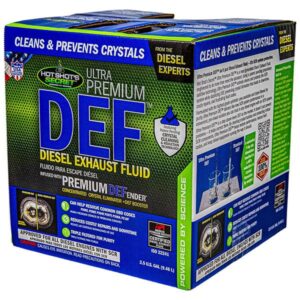
Hot Shot’s Secret engineered targeted treatments to help professional operators avoid unnecessary downtime. To solve this problem, Hot Shot’s Secret formulated Ultra Premium DEF Fluid for operators who know that standard retail fluids break down under severe operating punishment. Powered By Science, this formula meets all API and ISO benchmarks while incorporating patent-pending stabilizers and triple-filtered blending to withstand extreme thermal fluctuations.
Actively Cleans Existing Deposits at the Injector and Heater
Ultra Premium DEF Fluid actively dissolves existing white urea crystals from your injector nozzle, tank heating elements and decomposition chamber. This cleaning action restores the conical spray pattern that proper mixing demands and prevents residue from hardening into permanent restrictions.
Helps Reduce Common Cummins DEF Trouble Codes
By meeting the chemical conversion demands of the catalyst, this formula directly supports emissions performance. It targets common diagnostic triggers such as conversion efficiency thresholds and fluid quality readings, including P20EE, P204F and P207F codes. When active alerts appear on your dashboard, reviewing the P207F trouble code guide will walk you through isolating sensor circuit faults.
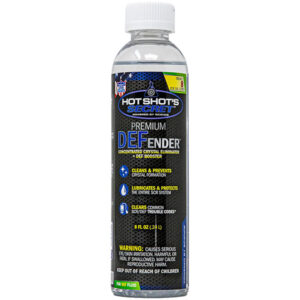
For operators who rely on bulk pump island fluid, adding concentrated Premium DEFender additive to your tank provides crystal-dissolving protection in a convenient bottle. Backed by the best money-back guarantee in the industry, Ultra Premium DEF Fluid delivers proven protection so you can keep working instead of waiting on diagnostics.
Frequently Asked Questions About DEF and Cummins Engines
Here are clear answers to the most common questions diesel drivers ask about managing DEF systems on Cummins platforms. These concise breakdowns clarify refill intervals, fluid compatibility and heavy-load consumption rates.
How often should I refill DEF on a 6.7 Cummins Ram Truck?
You should refill DEF on a 6.7 Cummins Ram truck every 5,000 to 7,000 miles under typical highway conditions. That consumption rate speeds up noticeably whenever you pull heavy trailers, haul heavy bed payloads or idle for extended periods.
Do semis and pickups use the same DEF or different formulations?
Semis and pickups use the same DEF formulation that meets ISO 22241 standards. Commercial semis and consumer pickups differ strictly in overall tank capacity and operational dosing volume while utilizing identical chemistry.
Can towing heavy loads increase how fast I go through DEF?
Towing heavy loads increases the rate at which you go through DEF because sustained engine strain raises combustion temperatures. These higher temperatures produce higher concentrations of raw NOx in the exhaust gas, forcing the ECM to command a higher dosing rate to keep emissions within legal limits.
Keep Your Cummins Emissions System Running Clean
Ready to protect your emissions system and avoid expensive downtime? Pick up a jug of Ultra Premium DEF Fluid today with free shipping on qualifying orders over $49 in the USA, or contact our diesel specialists to find the right maintenance solution for your Cummins rig.