

Whether you’re hauling a camper or carrying supplies, your diesel vehicle is designed to handle heavy loads. However, most modern diesel engines have highly sensitive, high-pressure fuel systems that are vulnerable to contamination and have lubricity issues.
Fuel system maintenance remains the best way to enhance performance and longevity, while avoiding catastrophic failures and multi-thousand-dollar repairs. The Hot Shot’s Secret team draws on over 20 years of experience solving diesel engine problems to provide a detailed, step-by-step service plan that any vehicle owner can follow. Learn how to keep your diesel fuel system efficient and roadworthy.
The Anatomy of Your Diesel Fuel System
Before we dive into our strategic maintenance plan, it is important to know the components of the fuel system. Understanding these components will make it easier to maintain your diesel fuel system.
High-Pressure Fuel Pump
The fuel pump plays a critical role in delivering high-pressure fuel to the common rail. This pressure, which can exceed 30,000 PSI, is essential for ensuring precise fuel injection to support optimal engine performance, better fuel economy and efficient combustion.
High-pressure fuel pumps rely heavily on fuel lubricants to maintain their internal lubricity. Low-quality lubricants can often cause metal-on-metal wear, leading to quick failure.
Fuel Injectors
Fuel injectors are electronically controlled nozzles with microscopic openings located on the cylinder head. These nozzles are engineered to deliver fuel directly to the combustion chamber.
Getting the pressurized fuel from the common rail, fuel injectors atomize it into a fine mist, ensuring an accurate fuel-to-air ratio. Beyond fuel atomization, these components also maintain accurate timing and spray patterns, maximizing combustion while minimizing pollutants.
Due to their microscopic openings, even small carbon deposits can disrupt the spray pattern, resulting in poor performance. They are also vulnerable to stiction caused by sludge and varnish.
The Fuel Filters and Water Separators
These two components are like your engine’s first line of defense, keeping contaminants out. The filters trap particulates such as dirt and rust, while the separators remove water from the fuel. Once the filters are full, they become ineffective, permitting particles that can cause abrasive wear to sensitive components. Failing water separators, on the other hand, allow water to enter the engine, which can cause corrosion and damage to the injector tip.
What Are the Signs of a Dirty Fuel System?
If your fuel system is having problems, there are several telltale signs to watch for. Here is a cheat sheet to help you quickly diagnose potential diesel fuel system problems:
- Loss of power and poor acceleration: If you notice your vehicle responding slowly, struggling on inclines or failing to reach its top speed, it’s likely the engine is being starved of fuel. Inadequate fuel delivery can stem from clogged filters or fuel injector nozzles that are choked with carbon deposits.
- A drop in fuel economy: When you notice your mileage per gallon worsening, the fuel being injected into the engine may not be burning completely. The classic cause behind low fuel economy is often a poor injector spray pattern, which wastes fuel, creates smoke and reduces the total power delivered to the engine.
- Hard starts and rough idling: There are several reasons behind hard starts and rough idling, such as clogged filters, dirty mass air flow (MAF) sensors and injectors that are sticking internally or not firing properly. Low-quality fuel, with a low cetane number, also contributes to hard starts by causing slow ignition.
- Excessive black smoke: Black smoke is often caused by unburnt fuel due to faulty injectors. Another reason behind this fuel system problem is clogged air filters, which may restrict the engine from getting enough air.
How to Maintain Your Diesel Fuel System
Each step in our diesel fuel system service is designed to help you restore efficiency quickly.
Fortify Your Fuel at Every Fill Up
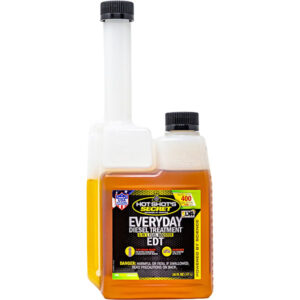
Fortifying your fuel is our top rule of preventive maintenance, which means using a high-quality fuel improver. Everyday Diesel Treatment (EDT) is a scientifically backed additive designed to enhance the quality of your fuel.
With our unique formulation, your standard Ultra-Low Sulfur Diesel (ULSD) can become a premium fuel your engine will appreciate.
EDT is a 6-in-1 formulation that mitigates common issues associated with ULSD:
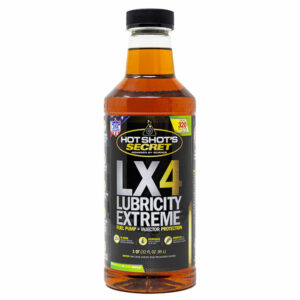
- Improves lubricity: EDT is infused with our superior LX4 Lubricity Extreme, which increases lubricity by up to 26%. Lubricity helps protect fuel pumps and injectors from wear.
- Boosts cetane: Our product is a concentrated cetane booster that can improve the cetane number of any fuel by up to seven points. An increased cetane number means faster, more complete combustion for a complete burn cycle, faster starts, less soot and lower engine stress.
- Neutralizes water: It helps control moisture, reducing the risk of corrosion, rust and microbial growth.
- Cleans the system: EDT contains high-quality detergents that help keep the entire fuel system clean of deposits and buildup.
Perform a Scheduled Deep Clean
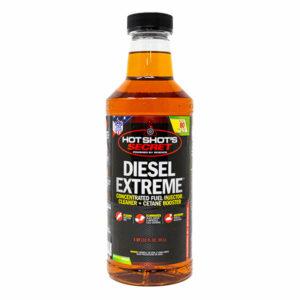
You will need to schedule a complete periodic deep clean to help you maintain your engine’s performance. For cleaning the diesel fuel systems, we often suggest an additive formulated with premium detergents. Diesel Extreme has the highest detergent concentration in the market.
Hot Shot’s Secret formulated Diesel Extreme to remove both internal diesel injector deposits (IDID) and external diesel injector deposits (EDID), which can clog the injector and affect internal fuel timing. This additive can also handle stiction-causing sludge and varnish.
Our diesel fuel system cleaner also has demulsification properties that effectively separate water from the fuel. You can trust the Diesel Extreme to clean everything from injector tips to the tank, cylinders and fuel lines while reducing diesel particulate filter (DPF) regeneration by up to 50%. We recommend using this diesel fuel additive every 6,000 miles, not on every refuel.
Use a Smart Filter Replacement Strategy
Follow your owner’s manual to determine the best interval for replacing your filters. But if you stay in areas with harsh climates, then you can cut the time between replacements by half. Regardless of your location, ensure you use superior filters that can handle anything ULSD throws at them.
Focus on Long-Term Injector and Pump Health
While every component of your fuel system is important, diesel pump and injector maintenance can significantly improve fuel economy, performance and overall system longevity. By combining daily protection additives with premium lubricants and scheduled deep cleans, you can reduce issues that can affect these sensitive components.
How to Clean Your Diesel Fuel System
Now that you have a maintenance plan, here is how you can implement it:
- Add your cleaner to the tank: The perfect place to start is with the EDT on your next refill.
- Run it through the system: Drive around and put the additive to work.
- Monitor improvements: Note the performance changes your additive makes.
- Complete a deep clean: Use Diesel Extreme during your scheduled deep clean to further enhance your engine’s performance.
- Schedule professional cleaning: Schedule professional diesel fuel system service to safely prolong your system’s life.
Common Diesel Maintenance Mistakes to Avoid
Here is a list of common mistakes to help you avoid regular owner pitfalls:
- Using gasoline additives: Gasoline and diesel systems are completely different, and each requires products specifically formulated for them. Using the wrong additive can harm your engine.
- Ignoring early symptoms: Your vehicle will always let you know if its system needs attention. Whether it is black smoke or engine knocking, don’t ignore warning signs. Investigate the potential cause and order the necessary tool and additive.
- Skipping fuel filter changes: Filters help keep the deposits out. Skipping replacements can leave your old filters overloaded with debris.
A Maintained Fuel System Is a Reliable Fuel System
The reliability of your diesel engine depends on a healthy fuel system. Let us help you maintain a high-performance engine system with our collection of fuel additives. Browse our products today for a healthier engine down the road.