
Billowing white smoke from your diesel exhaust signals unburned fuel, coolant intrusion or combustion failure. Left unaddressed, your repair bill could climb to four figures.
What Does White Smoke Indicate?
White smoke appears when combustion temperatures drop too low or foreign fluids are present in your cylinders. Think of it as your engine waving a white flag.
Normal vs. Abnormal White Smoke
Light white vapor during cold-weather startup is condensation, not catastrophe, and it disappears within minutes. If thick clouds linger after your engine warms up, the smoke tells a different story. This type of smoke typically stays dense and carries either a fuel smell or a sweet coolant scent.
Use this comparison to determine whether your white smoke signals trouble:
| Type of Smoke | When It Happens | Severity | Action Needed |
|---|---|---|---|
| Thin white vapor | Cold starts only | Normal | Monitor |
| Thick white clouds | After warmup | Serious | Diagnose now |
| Sweet-smelling | Any time | Critical | Check coolant |
| Fuel-smelling | Acceleration/idle | Moderate | Inspect the fuel system |
Common Causes of White Smoke in Diesel Engines
Understanding common diesel white smoke causes helps you identify problems faster. Five culprits cause most white smoke issues:
1. Unburned Fuel
White vapor can appear when diesel passes through combustion chambers without igniting due to poor atomization, incorrect timing or weak compression. If fuel injectors clog with deposits, they spray fuel like a garden hose instead of a precision instrument. Poor atomization means droplets never burn completely, and this white smoke diesel injector problem is one of the most common issues diesel owners face.
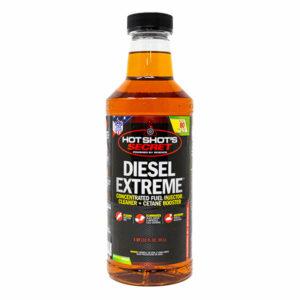
Diesel Extreme removes internal diesel injector deposits that interfere with spray patterns. The concentrated formula cleans buildup and boosts cetane up to seven points.
2. Coolant Entering the Combustion Chamber
A blown head gasket creates unwanted pathways between coolant passages and cylinders. Cracked cylinder heads or engine blocks produce identical symptoms, and EGR cooler failure dumps coolant directly into the intake. That sweet exhaust smell is your diesel engine burning coolant into white smoke.
3. Low Engine Compression
White smoke can also occur when compression heat fails to reach the ignition threshold that your engine relies on to burn the fuel. Worn piston rings lose their sealing ability, dropping compression below levels needed for ignition. Stiction Eliminator removes varnish and deposits, restoring compression and improving component efficiency.
4. Cold Engine and Combustion Temperature Issues
Glow plug failure prevents diesel engines from reaching ignition temperature during cold starts. When they fail, fuel enters cold cylinders that can’t ignite it.
5. Air Intake and Fuel Quality Problems
Clogged air filters restrict oxygen flow. Low cetane fuel struggles to ignite under compression. Poor-quality diesel combusts inefficiently in cold conditions.
How to Diagnose White Smoke in a Diesel Engine
Systematic diagnosis beats throwing parts at the problem. Follow these steps:
- Observe when smoke occurs. Startup-only smoke indicates glow plug issues. Constant smoke points to coolant leaks or injector problems.
- Check color and smell. White smoke with fuel odor means unburned diesel. Sweet smell confirms coolant intrusion.
- Monitor engine temperature. Engines running cooler than normal indicate thermostat failure. Overheating alongside white smoke screams head gasket failure.
- Inspect coolant levels. Disappearing coolant with no visible leaks means it’s burning inside the engine.
- Test fuel injectors. Listen for irregular engine pulses at idle.
- Perform a compression test. Low readings indicate worn rings or damaged pistons.
- Scan for trouble codes. Fuel system errors like P0201-P0208 point to injector circuit problems.
How to Fix White Smoke in a Diesel Engine Based on the Cause
White smoke demands a different fix depending on the cause.
Fixing Unburned Fuel Issues
Clean injectors restore proper spray patterns. Pour Diesel Extreme in your tank and let concentrated detergents dissolve buildup as you drive. The cetane boost eliminates white smoke.
Fixing Coolant Leaks
Replace blown head gaskets immediately. Continued operation washes away lubricating oil and scores cylinder walls. Inspect your EGR cooler for internal leaks. Hot Shot’s Secret offers coolants formulated to protect against cavitation.
Fixing Low Compression and Cold Start Issues
Professional repairs become necessary for worn rings. Stiction Eliminator reduces engine wear up to 62% more than oil alone. Replace failed glow plugs to restore cold-start performance.
White Smoke on Diesel Cold Starts
Brief white smoke during cold starts is normal when temperatures fall below 40°F. Your exhaust contains moisture that turns to visible vapor when it meets cold air.
When white smoke persists for more than five minutes or continues after your engine reaches operating temperature, it signals trouble. Thick smoke accompanied by a rough idle demands immediate diagnosis.
Can You Drive a Diesel With White Smoke?
Persistent white smoke after warmup means you should not drive your diesel. Operating your engine while it produces thick white smoke accelerates damage and transforms minor repairs into major expenses by creating these risks:
- Engine damage: Coolant washing over cylinder walls strips protective oil film and scores metal surfaces.
- Overheating: Coolant loss drops fluid levels, leaving your engine unable to regulate temperature.
- Fuel system failure: Unburned fuel contaminates engine oil and destroys lubrication.
Best Products to Eliminate White Smoke in Diesel Engines
Hot Shot’s Secret provides science-backed solutions that address root causes.
- For injector and fuel system issues: Diesel Extreme delivers concentrated cleaning that removes deposits, boosts cetane up to seven points and adds lubricity.
- For engine friction and compression: Stiction Eliminator attacks varnish and sludge that rob your engine of compression using FR3 nano-lubricant technology.
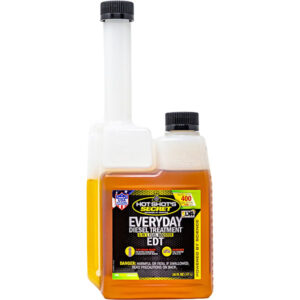
- For daily prevention: Everyday Diesel Treatment prevents problems before they develop for ongoing protection against white smoke and other issues.
Frequently Asked Questions About White Smoke in Diesel Engines
These questions address the most common white smoke scenarios diesel owners encounter:
Why Is My Diesel Smoking White But Not Overheating?
Injector problems or glow plug failure produce white smoke without raising engine temperature. Unburned fuel exits as vapor while your engine runs normally, indicating fuel system issues rather than coolant intrusion.
Does White Smoke Mean Bad Injectors?
White smoke often indicates bad injectors, causing poor fuel atomization. However, coolant leaks from blown head gaskets and low compression also produce white smoke. Check for a sweet odor to distinguish coolant intrusion from injector problems.
Can Bad Fuel Cause White Smoke?
Low-quality diesel with poor cetane struggles to ignite under compression. This incomplete combustion produces white smoke until your engine reaches operating temperature. The smoke clears as heat improves combustion efficiency.
Is White Smoke Always a Head Gasket?
White smoke does not always indicate head gasket failure. Faulty injectors, glow plug problems and low compression also produce white smoke. Blown head gaskets create thick white smoke with a sweet smell and coolant loss.
How Much White Smoke Is Normal?
Minimal vapor lasting 30 to 60 seconds during cold starts is normal condensation. White smoke visible after five minutes indicates problems requiring immediate diagnosis.
Your Guide to Quickly Diagnosing White Smoke
Use these identifiers to pinpoint the source:
- Startup only, clears quickly: Normal condensation or failing glow plugs
- Sweet smell: Coolant leak from the head gasket or cracked head
- Fuel smell: Injector problem or fuel quality concern
- Constant thick smoke: Serious engine issue demanding immediate repair
Eliminate White Smoke for Good With Quality Additives
White smoke won’t fix itself. Every mile takes you farther than a quick fix with an additive and toward an expensive rebuild. Hot Shot’s Secret backs every product with the industry’s best money-back guarantee. If our products don’t deliver, we’ll refund you. Contact Hot Shot’s Secret to discuss which products address your white smoke problem, or shop our evidence-based formulas today.