

If your diesel seems sluggish, runs rough or shows engine codes, it’s probably running lean. By design, diesel engines typically run with excess air, but if fuel delivery can’t keep up, that extra air can spell performance problems and even long-term engine damage. When the air-to-fuel ratio is too lean, real engine problems begin to appear. Learn how to spot the real symptoms of diesel lean condition, what causes these issues and how to fix them for good.
What Does Running Lean Mean in a Diesel Engine?
When someone says a diesel engine is running lean, they’re usually referring to an imbalance where there’s not enough fuel for the amount of air entering the engine. Diesel engines routinely operate with excess air compared to gas engines, which means “lean” isn’t automatically a problem. In gasoline engines, a true lean condition leads to power loss and elevated temperatures. While lean is expected in diesel engines, fueling that is too low for the engine load results in reduced performance and potential damage.
In gasoline engines, lean operation leads to high combustion temperatures, reduced performance and potential damage. Diesel engines, though, are engineered to run with excess air by default. Unlike gas engines, which use a throttle to meter air, diesels have unrestricted airflow. The engine simply injects more or less fuel depending on power demand.
While diesels are built to operate lean, an excessive imbalance in the air-to-fuel ratio points to insufficient fuel delivery. Symptoms arise because they can’t make power without enough fuel. Common causes include a weak fuel pump, clogged filters, dirty injectors or air intrusion into the fuel system, which lead to unstable combustion, reduced power and efficiency, and an increased risk of internal damage.
Symptoms of a Diesel Engine Running Lean
The following are warning signs that your diesel engine may be running too lean:
- Loss of power under load: When your truck feels weak or fails to accelerate as usual, insufficient fuel delivery is often a culprit. Most owners notice struggling up hills or when towing.
- Hard starting or extended cranking: If your diesel takes longer to start, it may be struggling with fuel delivery. Extended cranking is especially common after the engine sits cold.
- Engine hesitation or surging: Rough idling, lurching or surging at different speeds can signal an inconsistent fuel supply. Hesitation happens at stoplights or during rapid acceleration.
- Increased engine temperatures: Low fuel flow reduces the cooling effect of fuel, raising combustion temperatures and potentially causing overheating.
- White or light gray exhaust smoke: White or gray smoke typically signals incomplete combustion — often due to poor fuel atomization or delivery.
- Poor fuel economy despite lean conditions: If you’re filling up more often without driving more miles, something in the fuel delivery system isn’t working right. Paradoxically, a “lean” diesel can burn more fuel if the engine compensates by over-injecting or running inefficiently.
- Diagnostic trouble codes: P0171 code (“system too lean”) indicates an issue with the air-to-fuel ratio, usually on the fuel side.
What Causes a Diesel Engine to Run Lean?
When diagnosing, it’s important to understand each possible cause. Here’s what to look for:
- Insufficient fuel delivery: A weak or failing fuel pump cannot maintain pressure for modern diesel engines, while restricted fuel lines can’t deliver enough fuel to keep up.
- Clogged fuel filter: A clogged or dirty filter prevents fuel from reaching the injectors.
- Malfunctioning fuel injectors: Dirty, sticking or worn injectors create poor spray patterns and limit the amount of fuel entering the combustion chamber.
- Air in the fuel system: Cracked or loose lines allow air into the fuel circuit, causing pressure loss and erratic fueling.
- Low fuel rail pressure: Faulty fuel pressure sensors or pump issues lead to inadequate fuel injection.
- Poor fuel quality: Slower ignition, incomplete combustion and low effective power often stem from low-quality or low-cetane fuel.
- Faulty sensors: Incorrect sensor readings cause the ECU to miscalculate required fueling and make poor fueling decisions.
Lean vs. Rich Diesel Engine
Diesel engines rarely run “rich” unless there’s a mechanical failure or aftermarket tuning.
- Lean diesel: Having less fuel than required for operating conditions can cause white smoke, high temps and power loss.
- Rich diesel: Having more fuel than required can lead to black smoke, lower efficiency and potential soot buildup.
Quick tips for diagnosis based on the smoke you see:
- White smoke: Think fuel delivery or timing problem (not enough fuel or injected at the wrong time).
- Black smoke: Consider too much fuel, not enough air or poor combustion (often from a “rich” condition).
Is Running Lean Bad for a Diesel Engine?
Yes. While diesel engines handle excess air by design, insufficient fuel poses real risks:
- Higher combustion temperatures can damage pistons, valves and sensors.
- Chronic power loss and poor fuel economy reduce engine life.
- Unaddressed fuel starvation stresses the pumps and injector and accelerates wear on fuel system components.
Quick action prevents costly repairs and keeps your engine healthy.
How to Diagnose a Diesel Running Lean
You can often track down the cause of lean running with some straightforward steps:
- Check fuel filters: Replace overdue or dirty fuel filters for immediate improvement.
- Inspect the fuel system for air leaks: Look along all visible lines and connections for wet spots, bubbling or loss of prime.
- Measure fuel pressure: Use a fuel pressure gauge to detect weak pumps or a faulty regulator. OEM specs are available in your vehicle’s manual.
- Evaluate injector performance: Check for cylinder misfires or uneven fueling with a diagnostic tool and watch for balance rate irregularities.
- Scan for trouble codes: Electronic codes often identify hidden issues before they get worse. Look for codes like P0171 (System Too Lean) and other fuel system errors.
- Assess fuel quality: Visually inspect fuel for contamination, such as debris or odd smells and ask about cetane ratings if filling at an unfamiliar station.
How to Fix a Diesel Engine Running Lean
Once you’ve found the issue, follow these steps to get you back to peak performance:
- Replace or clean fuel filters: Fresh filters restore fuel flow quickly and prevent starvation. Regular replacement is key for every diesel system.
- Clean or restore fuel injectors: Use specialized fuel system cleaners to dissolve deposits and return injectors to peak performance.
- Repair fuel leaks or air intrusion: Tighten connections and replace worn hoses or seals to keep air out and maintain steady pressure.
- Improve fuel quality: Choose high-quality diesel from trusted stations and consider using a funnel with a particle trap on every fill-up.
- Increase cetane for better combustion: Boosting cetane helps ensure complete combustion, smoother running and prevents sluggish ignition. Look for cetane numbers on the pump or check your fuel card.
- Restore fuel system performance with additives: Targeted fuel additives remove deposits, stabilize combustion and prevent recurring issues.
Best Products to Fix a Lean Diesel Condition
Hot Shot’s Secret offers proven solutions to fix the root cause and keep your fuel system clean.
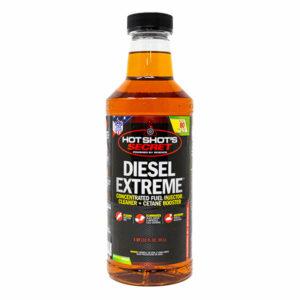
Diesel Extreme is a powerful cleaner engineered to remove internal and external injector deposits, restore proper spray patterns and maximize combustion. This formula boosts cetane levels and removes water, further optimizing performance for modern high-pressure systems. It can also improve cold starts and keep your fuel system clear between services.
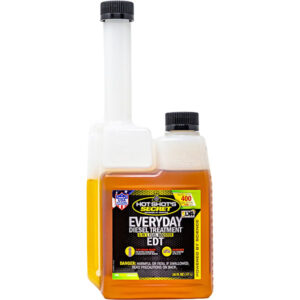
Everyday Diesel Treatment provides everyday protection and prevention. This additive keeps injectors and pumps clean, stabilizes fuel, prevents long-term buildup and helps maintain peak mileage, year-round.
Preventing a Lean Condition in Diesel Engines
Early attention is the best way to avoid fuel system problems and keep your diesel running strong for the long haul:
- Follow your truck’s maintenance schedule for fuel system components.
- Use high-quality diesel fuel every time.
- Replace fuel filters at or before their recommended intervals.
- Monitor changes in fuel economy, startup time and performance.
- Use preventive additives year-round for ongoing protection and reliability.
- Watch your dashboard for any changes in fuel economy or performance.
Fix and Prevent a Lean Diesel Condition With Hot Shot’s Secret
A diesel that’s running lean needs a simple, accurate fix. Most issues stem from fuel delivery and can be solved at home with top-tier products and regular maintenance. Early diagnosis and proactive fuel system care can save you thousands in repairs and keep you confidently on the road.
For proven, science-backed diesel solutions, explore the full Hot Shot’s Secret product lineup or contact us today for support.