
One minute, your truck is pulling like normal. Then, a warning light pops up, and the dashboard starts counting down miles. Ignore it long enough, and your truck’s computer takes matters into its own hands — restricting how your vehicle performs, if you can keep driving at all.
That’s typically what happens when diesel machines run out of diesel exhaust fluid (DEF). Rather than causing an engine failure, you encounter a deliberate escalation built into the emissions system.
The reason starts with what DEF actually does and why your vehicle’s selective catalytic reduction (SCR) system is designed to react when the fluid supply, quality or delivery system can’t do its job.
Why DEF Depletion Triggers Such an Aggressive Response
When your truck burns diesel, the combustion process produces pollutants such as nitrogen oxides (NOx). The SCR system sends DEF into the stream of the exhaust, and the heat converts it into ammonia.
That ammonia then reacts with the NOx, converting the harmful emissions into nitrogen and water vapor. Think of DEF as the chemical helper that makes the SCR system’s cleanup process work.
An empty DEF tank doesn’t affect your engine’s ability to burn diesel, but the emissions system no longer has what it needs to control NOx as designed. That’s why the truck doesn’t keep driving indefinitely. Since the EPA’s 2010 emissions standards drastically tightened allowable NOx levels for on-road diesel engines, SCR systems with DEF have become a major means manufacturers use to meet those requirements.
Allowing a vehicle to continue operating indefinitely without the reagent needed for NOx reduction would undermine that emissions-control system. Manufacturers built in inducement strategies — prompting drivers with warnings first, followed by increasingly restrictive operating conditions if the problem isn’t addressed.
The EPA Inducement Mandate Behind Derate and Limp Mode
Rather than letting an SCR-equipped vehicle operate normally while its emissions-control system is empty, contaminated, malfunctioning or being bypassed, the system can progressively restrict vehicle operation. Depending on the vehicle and the specific fault, that can mean reduced speed or, on some platforms, a no-restart condition.
An empty DEF tank isn’t the only trigger. Inducement strategies can respond to critically low DEF, fluid that fails the system’s quality requirements or faults involving components such as sensors and pumps. The exact strategy depends on the vehicle, engine, model year and software.
Changes to the EPA’s Approach
In 2025, the EPA issued revised guidance intended to reduce the severity of some DEF-related derates and give operators more time to address certain faults. In July 2026, the agency proposed additional changes that would replace required engine derates and vehicle speed reductions with visible and/or audible notifications for newly manufactured diesel vehicles and equipment.
In other words, the regulatory framework is evolving. The warning itself isn’t going away — the EPA still requires diesel vehicles to meet applicable NOx emissions standards. What’s changing is how aggressively manufacturers may be required to enforce those standards when an SCR problem occurs. That shift could mean fewer abrupt power losses for future diesels, which is good news for uptime.
DEF Warning Systems and What Dashboard Alerts Mean
Most SCR-equipped trucks follow the same basic warn, escalate and restrict sequence. However, the specifics aren’t universal. Manufacturers such as Ford and GM can use different warning thresholds and final restrictions. Even trucks from the same manufacturer can have varying numbers depending on the model year and engine.
Your owner’s manual is the authority for your truck. Still, understanding the general progression can help you recognize what that warning on the dash actually means.
Early Low-DEF Warning Light
The first alert is typically a solid amber DEF light, often accompanied by a message showing your estimated remaining DEF range. At this point, the truck generally operates normally.
Depending on the vehicle, the first warning can appear while you still have hundreds or even more than a thousand miles of estimated range. The key takeaway here is that the first warning is your refill window. If you’re seeing it before a long haul, stop and fill the DEF tank.
Countdown-to-Derate Mileage Warnings
You may see a specific number of miles remaining before a restriction, followed by increasingly urgent messages as that range drops. Depending on the manufacturer, platforms may use intervals like 500 miles, then under 100 miles. Eventually, the display may warn that engine power or vehicle speed will be limited. The system gives you multiple opportunities to correct the problem before performance becomes severely restricted.
What Happens When DEF Runs Out Completely?
If the DEF tank reaches empty and you continue operating, the truck can progress through several levels of inducement. Exactly what happens depends on the vehicle and its software, but the general stages are as follows.
1. Reduced Engine Power
When your diesel vehicle runs out of DEF, there can be a reduction in available torque or engine power, also known as a derate. It’s not a sudden engine cutoff. Instead, you may notice that acceleration is weaker, the truck struggles more under load or it simply doesn’t respond the way it normally does. The idea is to restrict operation while still giving the driver an opportunity to get somewhere safe and resolve the problem.
2. Speed Limitation
If the DEF issue remains unresolved, the vehicle may enter limp mode when it is shut off and then restarted with an empty tank. The system puts a hard cap on how fast the vehicle can travel. For some, that can be as low as 5 mph, though you can confirm the specific DEF warning and limp-mode sequence for your model by checking your owner’s manual.
3. No-Restart Lockout After Key-Off
If DEF still isn’t added, some engines refuse to restart after being shut off. This isn’t a mechanical failure. The starter, battery and fuel system may all be perfectly functional, but the engine control system is refusing to allow combustion until the SCR system is resolved.
What to Do If You Run Out of DEF
If you’ve already reached empty, your first move is to add the correct DEF as soon as possible. Depending on where you are, you may be able to find diesel exhaust fluid at:
- Truck stops and fueling stations with DEF pumps
- Auto parts stores
- Dealership service departments
Your SCR system is very particular about what goes into that tank, so use DEF that meets your vehicle’s specifications. Look for recognized quality markings such as API certification and ISO compliance.
How to Avoid Running Out of DEF
The easiest DEF problem to fix is the one you never have. A few simple habits can keep a low-fluid warning from turning into an expensive roadside interruption.
1. Monitor Your DEF Level Alongside Fuel
It’s easy to forget about a separate tank until the dashboard reminds you, so make checking DEF part of your normal fueling routine. You already know to watch your diesel fuel gauge. Give the DEF gauge the same attention. If you’re heading into a long haul, check the level before you leave.
2. Keep a Backup Jug on Hand for Long Hauls
If you’re driving long distances or operating far from major fueling points, keep a spare jug of DEF in the truck bed or cab. Just make sure the container is stored and handled according to the manufacturer’s recommendations.
3. Choose a Reliable, In-Spec DEF Fluid
DEF is a highly controlled fluid made of 32.5% urea and 67.5% purified water, and SCR systems are calibrated around that concentration. Low-grade DEF or evaporated fluid can cause crystallization and interfere with DEF flow, injector performance and other components, potentially contributing to fault codes and derates.
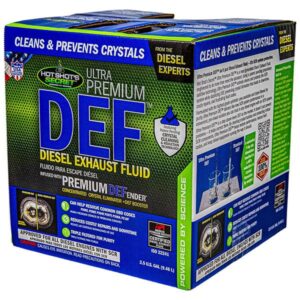
That’s why you need a dependable fluid like Hot Shot’s Secret Ultra Premium DEF™. It’s triple-filtered, API certified, ISO 22241-compliant and formulated with high-grade synthetic urea to help clean existing deposits and prevent new crystal formation.
Low DEF and Derate FAQs
Find quick answers to common questions about DEF warnings, empty tanks and derates.
How far can I actually drive after the DEF light first comes on?
How far you can drive after the first low-DEF warning appears depends on your vehicle. Many trucks provide several hundred miles of estimated range, but there is no single mileage figure that applies to every diesel vehicle. Check your owner’s manual and treat the first warning as your cue to refill.
Can I still drive with no DEF left?
An SCR-equipped truck may continue running after the DEF tank is empty, particularly during the early stages. Being able to drive doesn’t mean you’re in the clear. Continued operation can move the system toward a derate, speed restriction or complete lockout.
How long until the derate clears after refilling?
Don’t be alarmed if the vehicle doesn’t instantly return to normal after adding DEF. If a low fluid level was the only issue, the system may simply need a key cycle or some driving time to re-read fluid levels.
Does running out of DEF cause permanent engine damage?
Running out of DEF doesn’t typically cause damage to the engine itself because DEF doesn’t feed combustion. However, repeatedly running the tank dry can damage components such as the pump and DEF header sensor. It can also contribute to crystallization, which interferes with proper fluid delivery and SCR operation.
Will fault codes clear automatically after refilling, or do they need to be reset?
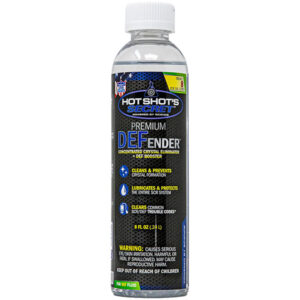
Fault codes often clear after a proper refill and a short drive cycle. A persistent code can indicate a different issue, such as DEF crystallization or an SCR component fault. In those cases, the system may need further diagnosis and potentially a treatment like Premium DEFender to fully resolve.
Protect Your SCR System With Hot Shot’s Secret Ultra Premium DEF™
Whether you’re running a pickup, a semi or diesel machines out on the jobsite, protecting your SCR system starts with what you pour into the tank. Talk to one of our experts to learn more about Ultra Premium DEF™, and let Hot Shot’s Secret help you keep your vehicles running the way they’re supposed to.