
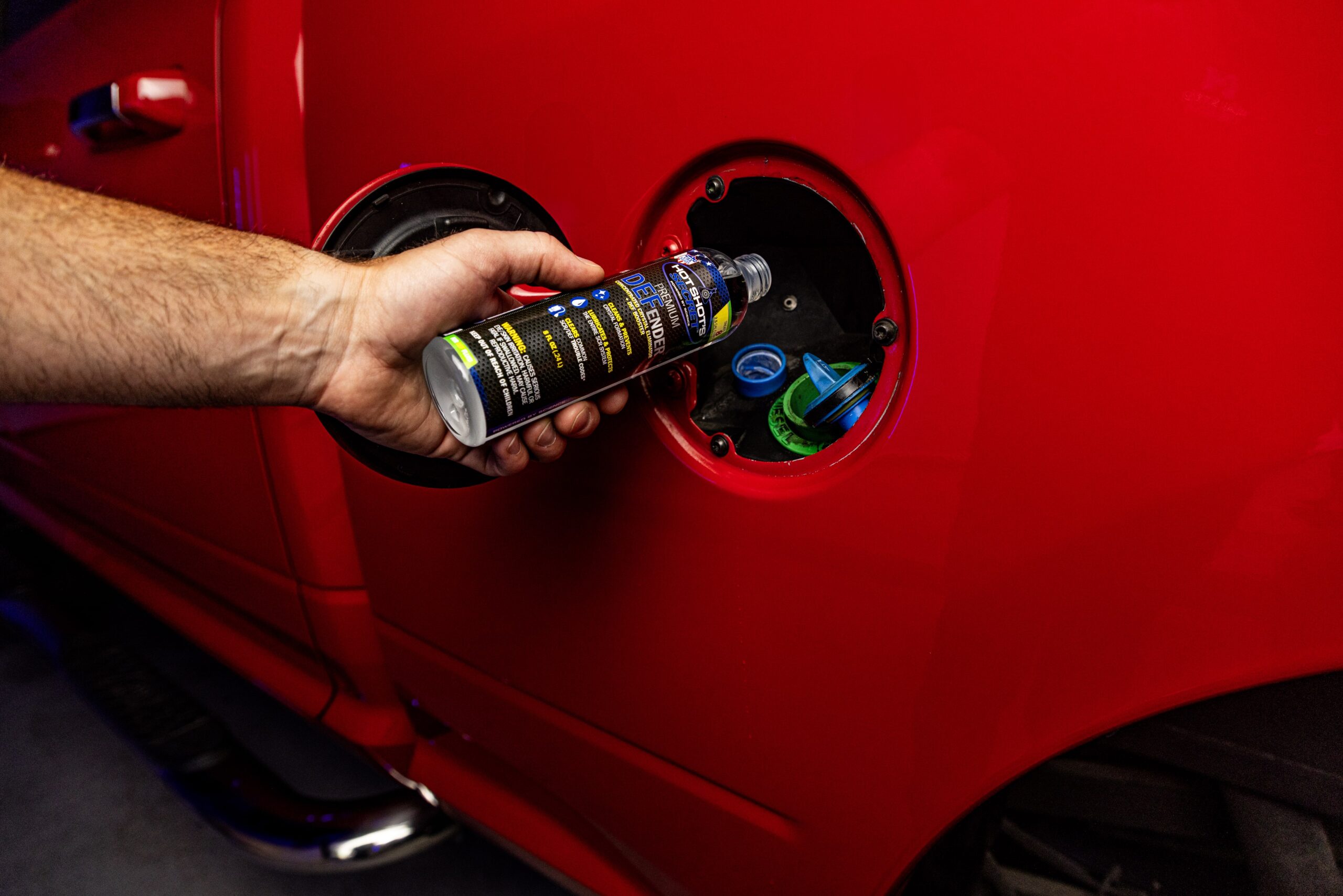
Diesel exhaust fluid (DEF) helps control emissions, allowing your engine to run cleanly and efficiently. If you’re seeing lost power, lower fuel economy or strange shutdowns, DEF system issues may be the cause.
Diesel exhaust fluid issues trigger symptoms such as reduced fuel efficiency, power reduction or unexpected shutdowns. Ignoring these signals will lead to a bigger and far more expensive problem down the line. Learn how to fix DEF problems and the proper maintenance routine to prevent costly repairs.
What Is Diesel Exhaust Fluid?
DEF is a non-toxic solution composed of 32.5% high-purity urea and 67.5% deionized water. It is mandated by EPA regulations to reduce harmful nitrogen oxide (NOx) emissions. DEF is injected into the truck’s exhaust stream, where it works with the selective catalytic reduction (SCR) system to convert nitrogen oxide into nitrogen gas and water vapor. Your vehicle consumes more DEF during heavy towing or high-speed driving, so plan accordingly for demanding work.
Issues with DEF can trigger limp mode, drastically reduce power and fuel economy, or cause a complete system shutdown. Using high-quality DEF and storing it properly is essential for overall engine health and performance, as poor-quality or contaminated fluid can damage sensitive components and lead to costly repairs.
Low DEF Levels or Incorrect DEF Quality
When the fluid drops below a critical level, the electronic control module (ECM) triggers a reduced power mode to limit engine performance. Your first clue is usually a DEF warning light or a “Service Emissions System” alert illuminating your dashboard. You may also notice a sudden decrease in fuel economy.
Causes include:
- Failing to refill the tank regularly.
- Evaporation or leaks in the DEF lines or tank seals.
- Using off-brand, expired or contaminated DEF.
How to fix it:
- Top off the tank using only DEF that displays the API Certification Mark to ensure purity. On most pickups, the blue DEF filler cap is located next to the diesel fuel opening. On larger trucks, it may be a separate tank on the frame.
- If you need to refill more often than usual, check the system for white crystalline deposits, which indicate a leak. Replace seals if necessary.
- Always wipe down the DEF filler area before removing the cap to prevent dirt and debris from contaminating the tank.
Keep sealed containers of DEF on hand, especially when towing heavy loads or traveling long distances.
DEF Crystal Buildup
Crystal buildup is a primary and often hidden problem within diesel SCR systems. When the water in DEF evaporates due to heat, air exposure or prolonged inactivity, it leaves behind solid urea deposits. DEF fluid has a freezing point of 12°F and forms crystals when frozen that can clog the system’s injectors and lines. They can also block the SCR catalyst, preventing NOx conversion and causing warning lights to illuminate.
The warning signs of crystal buildup include:
- Visible white, crusty deposits forming around the DEF injector, nozzle or filler cap.
- Diagnostic trouble codes such as P20EE or P207F.
- The engine may enter a derate or “limp” mode.
- A noticeable loss in DEF efficiency.
Take these steps to address the problem:
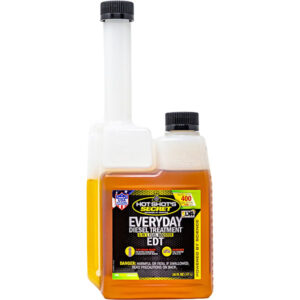
- Use a high-quality DEF system cleaner and maintenance additive, such as Hot Shot’s Secret Premium DEFender, to clean deposits and prevent future buildup.
- After cleaning, inspect the DEF injector and sending unit for any residual buildup that may require manual removal.
- Seal the DEF caps tightly to minimize air exposure and slow the evaporation rate.
Crystallization can spread throughout the DEF system, clogging injectors and lines. Preventing buildup early is far more effective — and cheaper — than reactive cleaning.
DEF Contamination
Diesel exhaust fluid contamination is a silent killer for SCR systems. During handling and storage, fuel, oil, coolant, dust, and dirt from dirty filler caps and refill containers can damage expensive components like the DEF injector, SCR catalyst and various sensors. Inaccurate sensor readings can trigger engine derates or forced regenerations. You might also encounter issues after accidentally adding diesel fuel, oil, coolant or any other fluid to the DEF tank.
Some symptoms of DEF contamination include:
- The check engine light or a specific DEF system warning illuminates on your dashboard.
- Unexplained or erratic drops in engine performance.
- The DEF fluid appears cloudy, discolored or contains visible debris.
Do not start the engine if you suspect the DEF is contaminated. Running the engine will circulate the contaminated fluid and damage the SCR system. Instead, have a professional drain and flush the tank to remove all traces of the contaminant. Once the system is clean, refill it with fresh, high-quality, API-certified DEF.
You can prevent future issues with contamination by following these best practices:
- Always wipe the dirt and dust from around the DEF filler cap before opening it.
- Never use funnels or containers that have held any other fluid.
- Keep DEF in its original, sealed container in a cool, dark place away from direct sunlight.
- Add Hot Shot’s Secret Premium DEFender™ with each refill to help maintain DEF quality.
Frozen DEF
Diesel exhaust fluid freezes at 12°F (-11°C), so it’s a common occurrence for operators in colder climates. Your truck’s SCR system has built-in heating elements that thaw the fluid as the engine warms up. Your engine should start and run normally while the DEF thaws. Problems arise if you operate the vehicle for an extended period without thawed DEF or if the system’s heater itself fails.
You might be experiencing frozen DEF if you see a warning light that appears only during cold weather, often on startup, or a dashboard notification indicating the emissions system is inactive.
Start your vehicle and allow it to idle for a few minutes. The built-in heaters in the tank and lines will thaw the DEF, and the system will become active. Never add antifreeze, alcohol or any other “anti-gelling” chemicals to your DEF tank. These will contaminate the fluid and damage expensive SCR system components.
Follow these prevention tips for fewer DEF issues:
- In winter, avoid filling up your DEF tank and keep it around ⅔ full, leaving space for the fluid to expand when it freezes, preventing potential damage to the tank.
- If possible, park your vehicle in a garage or a sheltered area to protect it from the coldest temperatures.
- Always use DEF that meets the ISO 22241 standard to ensure it has the correct properties for freezing and thawing as the system expects.
Sensor and Injector Malfunctions
Sensors monitor DEF levels, NOx emissions and exhaust gas temperature, feeding this data to the engine control module (ECM). The DEF injector’s job is to spray a precise, atomized mist of DEF fluid into the exhaust stream. A faulty sensor sends faulty data to the ECM, triggering false alarms and reducing fuel efficiency. A clogged injector can’t deliver DEF properly, impacting emissions control and engine performance.
Sensor and injector malfunctions come with warning signs such as:
- A persistent check engine light or an SCR Fault message.
- DEF Codes such as P2033 (DEF Level Sensor), P207F (DEF Quality) or P20EE (SCR NOx Catalyst Efficiency).
- Noticeable and inconsistent changes in how much DEF your vehicle uses.
These issues can occur for several reasons:
- Hardened urea crystals can clog the injector nozzle and foul sensor heads.
- Dirt, debris or other fluids in the DEF can permanently damage these delicate components.
- Corrosion on the system’s wiring harness or connectors can interrupt signals between the sensors and the ECM.
- Using low-grade DEF can accelerate wear and lead to premature failure of the injector or sensor.
If you encounter these issues, a professional will remove the DEF injector and NOx sensors to inspect and clean them. If cleaning doesn’t restore function, a replacement is necessary. Inspect the wiring harness and connectors leading to each sensor for signs of corrosion, looseness or damage.
The best “fix” is to stop the problem before it starts. The most common cause of sensor and injector failure is the crystal buildup discussed earlier. By preventing crystals from forming, you protect these vital and expensive components. Add Hot Shot’s Secret Premium DEFender to prevent crystal buildup and keep injectors and sensors clean.
Poor DEF Storage and Shelf Life Issues
Diesel Exhaust Fluid has a limited shelf life and is sensitive to storage conditions. When exposed to heat or direct sunlight for extended periods, the urea breaks down and is less effective at reducing emissions. You’ll know there’s a problem if the fluid appears cloudy, has yellowed or emits a strong ammonia odor. Additionally, the DEF or check engine light may come on shortly after refilling the tank with old DEF.
You might experience issues if:
- The DEF has been stored for more than 12 months, leading to natural degradation.
- The container was left in direct sunlight or a hot environment, like a truck bed or closed garage.
- The container was left open, allowing water to evaporate and contaminants to enter.
Keep DEF containers sealed tightly in a cool, dark place away from direct sunlight. If you suspect DEF is old or has gone bad, do not use it. Dispose of it according to EPA regulations. Always check the manufacturing date on an old bottle before using it to ensure the product is still effective. If you’ve already added the bad fluid to your tank, the only safe solution is to have the tank drained completely and refilled with fresh DEF.
Expert Tips to Keep DEF Systems Running Smoothly
Adhering to these best practices can help you prevent DEF system issues:
- Always buy API-certified DEF from sealed containers.
- Avoid topping off with leftover DEF from unknown sources.
- Keep the DEF fill port and cap clean.
- Regularly inspect hoses and lines for leaks.
- Use Premium DEFender™ with every refill for continuous protection.
Protect Your Diesel Investment
The health of your diesel’s emissions system is not something to leave to chance. Although issues within the diesel exhaust fluid system are common, they are also preventable. A clogged injector or failed sensor can lead to thousands of dollars in repair bills and costly downtime. Proactive care is your most powerful tool. Integrating a high-quality additive into your routine is the most effective way to safeguard your entire SCR system.
Hot Shot’s Secret Premium DEFender™ provides constant, reliable protection inside your DEF tank. It prevents the formation of harmful urea crystals, keeping injectors and sensors clean and functioning. Regular maintenance is a small, inexpensive step that protects your investment, prevents breakdowns and delivers dependable performance mile after mile. Purchase yours today!