
Why is it important to clean your EGR system? Below, we’ll discuss how EGR systems work, common problems that can arise and how an effective cleaner can prevent them.
What Is an EGR System?
Air from the environment, which typically contains nitrogen and oxygen, mixes with fuel and ignites within the vehicle’s combustion chamber. This process increases temperatures and nitrogen oxide emissions.
An exhaust gas recirculation (EGR) system controls nitrogen oxide emissions in gasoline and diesel engines. It recirculates a small portion of the exhaust gas back to the cylinders through the intake manifold. This process helps reduce combustion temperatures and nitrogen oxide emissions.
The valve is the main component of an EGR system. Controlled by a built-in electric step motor or vacuum, it connects the exhaust manifold to the intake manifold. An EGR valve manages the flow of recirculated exhaust gas depending on the engine load.
In downsized gasoline direct injection (GDI) engines, the valve can improve combustion efficiency, increase knock tolerance and reduce pumping losses. It can also reduce idling knock in diesel engines.
EGR Valve Settings
An EGR valve has two main settings — open and closed. However, the position can fall between these settings. The EGR valve is closed when the engine starts.
Idling and low speeds require minimal power and oxygen, so the valve gradually opens. As torque and power requirements increase, such as during full acceleration, the valve closes so the proper amount of oxygen can enter the cylinder.
What Is EGR Fouling?
As a product of thermophoresis and condensation, EGR cooler fouling occurs when hydrocarbons and particulate matter in diesel exhaust create a deposit on the cooler walls. An EGR cooler is a water-to-air heat exchanger between the valve and turbocharger. It has one or more hollow traveling tubes for hot exhaust gas. Multiple coolant passages surround these tubes.
Deposit buildup in an EGR cooler can decrease heat transfer performance and increase pressure drop across coolers. These issues can lower your engine’s efficiency.
5 Signs of a Faulty EGR Valve
A faulty valve can complicate EGR system operation and flow, causing various performance issues, such as reduced acceleration, power and fuel efficiency. It can also increase vehicle emissions.
Motorway driving tends to be kinder to an EGR valve. Faster, longer trips allow the engine to build sufficient heat to remove carbon deposits. Urban driving conditions are less friendly to EGR valves since they enable these deposits to accumulate.
Built-up carbon deposits, dirt and soot particles can cause EGR valves to stick open or closed. Here are a few indicators of a faulty EGR valve.
1. Poor Performance
Poor or erratic vehicle performance can result from a valve stuck in an open or closed position. A stuck valve can cause an improper mix of fuel and air within the combustion chambers. If the valve is stuck open, it lets in too much exhaust gas. A constantly closed valve will raise your emissions significantly.
2. Rough Idling
Your EGR valve might be stuck open if you notice a rough idle when starting your engine or during brief stops.
3. Knocking Sound
A permanently closed EGR valve raises the temperature inside the combustion chambers. In turn, the fuel can ignite earlier than it should, which can cause a knocking sound. Prolonged knocking can damage inner components and strain the engine.
4. Increased Emission
Your vehicle will release more emissions when your EGR valve isn’t functioning correctly.
5. Fuel Smell
A continuous flow of exhaust gases into the intake manifold can create a pungent fuel smell. Not all of the fuel burns at low revs, causing the hydrogen carbon gases released from the tailpipe to produce a strong fuel odor.
Prevent EGR Fouling With Solutions From Hot Shot’s Secret
Excess soot buildup in the EGR system can cause valves to stick and sensors to fail, leading to poor performance, higher emissions, and costly downtime. The best way to extend EGR system life is to prevent soot formation before it starts.
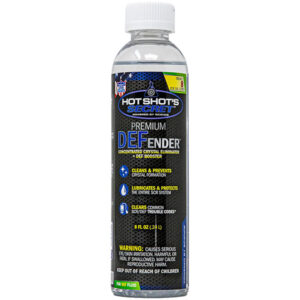
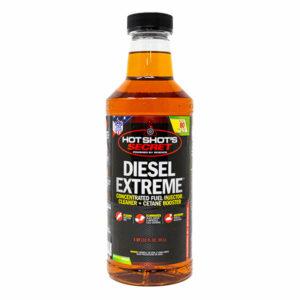
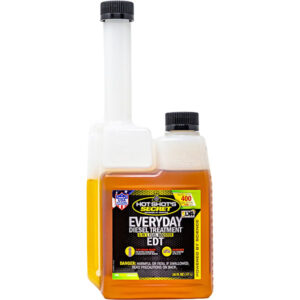
Hot Shot’s Secret Diesel Extreme and Everyday Diesel Treatment (EDT) are proven to reduce soot and carbon buildup throughout the fuel and exhaust system. By improving combustion efficiency and keeping injectors clean, these additives help lower soot production—keeping EGR valves, sensors, and coolers cleaner for longer.
In a City of Columbus fleet study, vehicles treated with Hot Shot’s Secret fuel additives showed measurable reductions in soot-related issues and maintenance costs. Cleaner combustion not only protects critical components like the EGR valve but also supports better fuel economy and less DPF regens.
At Hot Shot’s Secret, we stock a variety of oils, spray lubricants and additives to prevent common automotive issues and increase performance. Browse our selection to find cleaning products for your EGR system. If you need help finding the right solution, reach out to our experts.