
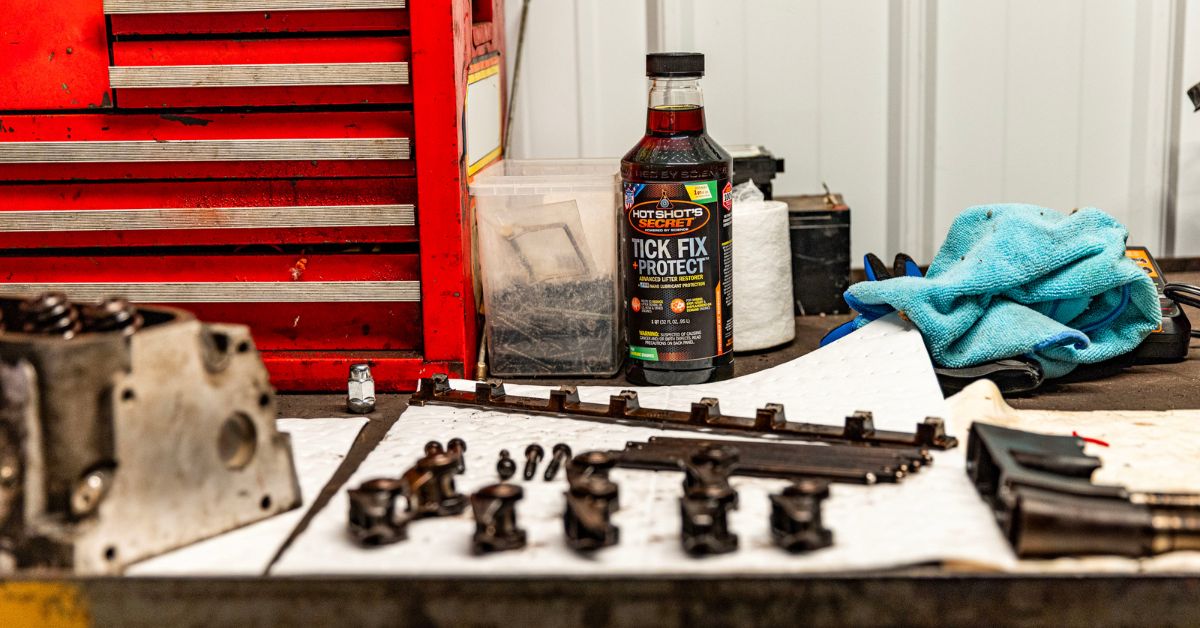
That ticking sound isn’t “just engine noise.”
It’s your valvetrain telling you something’s wrong—and if you ignore it, the repair bill won’t be quiet.
Hydraulic lifters depend on clean, free‑flowing oil to do their job. When oil breaks down, pressure drops, or deposits build up, lifters can’t stay pumped up. That’s when the ticking starts. Left unchecked, that noise turns into lost power, misfires, cam wear—and serious engine damage.

What Does an Engine Lifter Do?
At its core, an engine lifter, particularly a hydraulic lifter, works as a bridge in your engine’s valvetrain. Situated between the camshaft lobe and the pushrod, its primary role is to transfer the camshaft’s rotational motion into linear motion to open and close engine valves.
Hydraulic lifters are engineered to automatically maintain zero valve lash — the tiny gap between valvetrain components. They use engine oil pressure, which fills an internal chamber and acts as a cushion to take up any slack. This constant, automatic adjustment is critical for quiet, efficient engine operation, making hydraulic lifter failure symptoms a significant threat to performance.
What Causes Lifters to Go Bad?
Lifters don’t typically fail instantly. Their decline is usually gradual, primarily driven by factors related to engine oil. Modern engines, with their intricate designs and tight tolerances, place immense demands on lubrication. The same systems that improve efficiency, such as cylinder deactivation, add complexity to lifter operation.
Over time, factors such as oil degradation, contamination, inadequate oil pressure or the accumulation of deposits lead to increased friction and compromise the lifter’s ability to maintain hydraulic integrity. These effects set the stage for the development of bad lifter symptoms.
The Most Common Bad Lifter Symptoms
Recognizing the signs of bad lifters early can prevent extensive damage.
Pay attention to the following key indicators:
-
Ticking or tapping noise from the engine: This sound is the classic lifter tick symptom. It’s a rhythmic, light tapping that typically emanates from the top half of the engine. This noise is often most noticeable on cold starts, at idle or under light load. The ticking usually speeds up with engine RPM, but may not always be consistently present.
-
Rough idle or engine vibration: When a lifter struggles to maintain proper valve lash, it can lead to slight inconsistencies in valve timing. This issue affects the engine’s combustion process, causing bad engine lifter symptoms such as a noticeably rough idle or vibrations that can be felt through the steering wheel or chassis.
-
Loss of power or poor acceleration: A sticking or partially collapsed lifter prevents its corresponding valve from opening or closing fully and consistently. It limits proper airflow, directly reducing combustion efficiency and causing a noticeable decline in engine power and sluggish acceleration, impacting drivability.
-
Check engine light or misfire codes: If a lifter’s malfunction becomes severe enough to cause valve timing issues or misfires, the engine’s onboard diagnostic (OBD-II) system detects it, triggering the check engine light (CEL) and storing diagnostic trouble codes (DTCs). While these codes indicate a combustion issue, they don’t pinpoint the bad hydraulic lifter.
-
Engine noise that gets worse over time: Lifter noise often progresses gradually, and what starts as an occasional lifter tick symptom may become constant and louder. This worsening engine noise is a critical indicator of advancing wear and signals that the problem is escalating from minor hydraulic issues to serious mechanical damage.
Early vs. Late-Stage Lifter Failure Symptoms
Understanding the progression of lifter failure symptoms helps in deciding the urgency of action.
Early-Stage Symptoms
These early bad lifter symptoms suggest that oil flow and cleanliness are the primary culprits, making the issue potentially reversible with noninvasive treatments:
-
Occasional ticking noise, often only heard at startup or idle.
-
Noise that dissipates as the engine warms up or oil pressure stabilizes.
-
No noticeable loss in drivability or power.
Advanced Lifter Failure Symptoms
When you notice the following symptoms, lifter failure has reached an advanced stage, and there’s a high risk of camshaft damage:
-
Constant and loud ticking or knocking, regardless of engine temperature or RPM.
-
Noticeable and persistent power loss or sluggish acceleration.
-
Frequent and severe engine misfires, especially under load.
-
The appearance of collapsed lifter symptoms, such as a metallic clatter, which is often accompanied by a CEL.
Collapsed Lifter Symptoms Explained
A collapsed lifter results in severe hydraulic lifter failure symptoms. It occurs when a hydraulic lifter completely loses its ability to “pump up” and maintain proper valve lash, often due to a significant drop in internal oil pressure or mechanical failure. Unlike a sticking lifter, which might produce an intermittent tick, a collapsed lifter means the valve is not opening or closing correctly.
The result is a louder, more consistent metallic clatter, immediate engine performance degradation and misfire codes. Recognizing these collapsed lifter symptoms is critical, as they signal advanced damage that leads to severe mechanical consequences.
Can Bad Lifters Damage Your Engine?
Ignoring bad lifter symptoms escalates engine damage. When a lifter malfunctions, it often doesn’t maintain proper contact with the camshaft lobe, leading to increased metal-on-metal friction and wearing down the lifter and the camshaft lobe. The resulting metal debris can contaminate the engine oil, causing further wear throughout the engine. Repair costs for damage involving camshaft and lifter replacement can be substantial, making early diagnosis invaluable.
Sounds Mistaken as Bad Lifter Symptoms
Accurate engine noise diagnosis is key to avoiding unnecessary panic. Being able to make an informed evaluation based on sound characteristics, location and engine behavior prevents misdiagnosis and helps you avoid assuming the worst.
Some sounds often mistaken for bad lifter symptoms include:
-
Fuel injector clicking: This sharp, rapid click, usually quieter than a lifter tick, is part of normal operation.
-
Exhaust manifold leaks: Leaks can create a ticking sound, but it typically comes from the exhaust area and may change with temperature.
-
Rod knock: A much deeper, heavier, more ominous thud suggests rod knock, and you should stop driving immediately.
What to Do If You Notice Bad Lifter Symptoms
Bad lifter symptoms are your engine’s way of asking for attention. Here are three proactive ways to address them as soon as they are detected:
1. Address Oil Condition and Flow
Hydraulic lifters are entirely oil-dependent. Ensure your engine oil is at the correct level and replace it with a high-quality, manufacturer-recommended viscosity and specification. Contaminated or degraded oil is a primary culprit for compromising lifter function.
2. Clean Deposits Before Wear Becomes Permanent
Varnish and sludge restrict lifter function and block oil passages. Targeted cleaning agents can dissolve these deposits, often restoring full lifter function. The timing here is crucial — early intervention, when lifter tick symptoms are mild, offers the best chance for a noninvasive fix.
3. Protect Against Future Wear
Reducing friction and providing enhanced lubrication helps guard against future wear on lifters and camshaft lobes. Modern valvetrains, with their tight tolerances and high demands, benefit significantly from enhanced protection to maintain smooth operation.
When an Oil Additive Can Help With Bad Lifter Symptoms
Targeted oil additives are highly effective for bad lifter symptoms caused by dirty, sticking or under-lubricated lifters. It’s crucial to select additives specifically designed for these functions, avoiding products that merely thicken the oil or mask noise.
These functional additives are engineered to:
-
Clean varnish and carbon deposits from lifter mechanisms and oil passages.
-
Improve oil flow to valvetrain components.
-
Protect high-wear valvetrain components.
A Targeted Solution for Early-Stage Lifter Problems
Tick Fix + Protect™ from Hot Shot’s Secret is an effective solution for early-stage lifter issues. The advanced, lifter-focused formulation addresses common issues in gasoline hydraulic lifters. It supports lifter cleaning, optimizes oil flow and enhances valvetrain protection. Tick Fix + Protect™ provides a proactive, noninvasive approach to resolving engine ticking lifter problems before they escalate.
When Bad Lifter Symptoms Mean Mechanical Repair Is Required
While additives can resolve many lubrication-related causes, they cannot fix irreversible mechanical damage. Signs of collapsed lifters or damaged camshafts, such as a severe metallic clatter, persistent misfires or a visible lack of valve lift, indicate mechanical repair is required. In these instances, trust your mechanic’s assessment, because no additive can restore physically broken components.
Maintain Your Lifter Health — Don’t Ignore the Warning Signs
Take action at the first sign of trouble. Bad lifter symptoms often appear gradually, providing a critical window for intervention. Proactive maintenance, guided by an understanding of hydraulic lifter failure symptoms, is the best defense against escalating damage and costly repairs.
Explore Hot Shot’s Secret Tick Fix + Protect™ or contact us to learn more about this proven solution for early-stage engine lifter symptoms.