Duramax 3.0L (LM2 & LZ0) Fluid Capacities & Issues
Duramax 3.0L (LM2 & LZ0) Overview
Certain vehicles, such as the Chevy Silverado 1500, Tahoe, Suburban and GMC Yukon, boast some of the most impressive performance due to their Duramax engines. Identified as having one of the 10 best engines by Wards Auto in 2020, GMC Sierra pickups can handle everything from highway driving to towing jobs. Although the engine exhibits robust horsepower, the GMC Sierra 3.0 diesel engine may still present some engine problems. Hot Shot’s Secret is here to help you diagnose and treat those issues with a broad range of expertise and carefully formulated products.
Fluid Capacity
-
Fluid TypeApplicationFluid CapacityService IntervalFluid SpecNotes
-
Engine Oil3.0L Duramax (LM2 & LZ0) w/ Filter7.0 QTS.~7,500 milesSAE 0W‑20 dexosD™ Approved
Use only dexosD™‑approved 0W‑20 diesel engine oil. GM requires low‑ash oil for emissions system protection.
Recommended: Green Diamond 0W‑20 Light Duty Diesel Motor Oil
Do not substitute other viscosities.
-
Fuel TankSilverado / Sierra 1500 Diesel24.0 GALS. (approx.)Ultra‑Low Sulfur Diesel
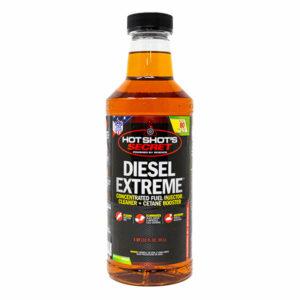
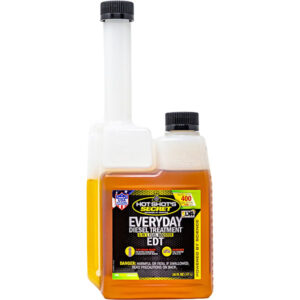
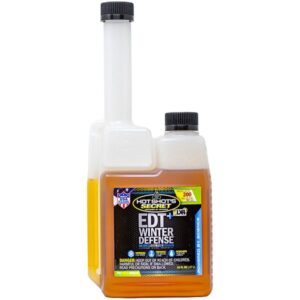
Recommend: Use Diesel Extreme every 6,000 miles and Everyday Diesel Treatment with every fill up. For additional lubricity, LX4 Lubricity Extreme may be used. In freezing temperatures, switch from Everyday Diesel Treatment to EDT+ Winter Defense for protection against fuel gelling.
-
Automatic Transmission FluidGM 10L80 – Drain & Refill8.1 QTS.Severe Service: 45,000 milesDEXRON ULV
Recommended: Green Diamond ULV ATF.
Use Shift Restore as preventative maintenance or to address shift concerns.
-
GM 10L80 – Total Capacity12.8 QTS.DEXRON ULV
All capacities are approximate. Verify fluid level using GM service procedures.
-
Brake FluidHydraulic Brake SystemN/A5 YearsDOT 3 Brake Fluid
Use only DOT 3 brake fluid from a sealed container.
-
Differential Gear OilFront Axle (4WD)1.15–1.25 QTS.Severe Service: 50,000 milesSAE 75W‑90 Synthetic Gear Oil
Recommended: 75W-90 Blue Diamond Severe Gear Oil.
Service immediately if submerged.
-
Rear Axle2.1–2.75 QTS.Severe Service: 50,000 milesSAE 75W‑90 Synthetic Gear Oil
Recommended: 75W-90 Blue Diamond Severe Gear Oil.
Service immediately if submerged.
-
Transfer Case FluidTransfer Case1.6 QTS.Normal: 97,500 miles Severe: 45,000 milesDEXRON ULV
Use DEXRON ULV only.
Recommended: Green Diamond ULV ATF. Service immediately if water intrusion is suspected.
-
Engine Coolant3.0L Duramax20.2 QTS. (5.05 GALS.)150,000 miles / 5 yearsGM Approved Extended Life Coolant
Recommended: Hot Shot’s Secret 150k Extended Life Yellow Antifreeze.
-
Diesel Exhaust Fluid (DEF)SCR System5.3–5.4 GALS.As NeededISO 22241 / API Certified DEF
Recommended: Hot Shot’s Secret Premium DEFender to avoid SCR system issues.
Maintain DEF level to avoid speed limitation. Fill with at least 2 gallons if warning appears.
-
Windshield Washer FluidWasher SystemN/AAs NeededWindshield Washer Fluid
Follow the manufacturer’s mixture instructions.
Common Chevy and GMC 3.0 Diesel Problems
Duramax deserves premium treatment, so when choosing oil, you must select an oil that matches the capabilities of your engine. Generally, there are five key factors to consider when choosing the correct oil for your vehicle. Before attempting to diagnose your engine troubles, check out our guide to choosing the optimal oil for your vehicle. Duramax 3.0 diesel engines require 7 quarts of oil for oil changes, and you should perform them with the frequency recommended in your owner’s manual.
No vehicle glides through life without giving problems, with the right information, you can diagnose those issues as efficiently as possible. Consider these common Duramax 3.0 problems.
Running Roughly or Misfiring
Your 3.0 Duramax engine experiencing rough running or misfiring might be related to external or internal diesel deposits. In such cases, addressing these deposits with appropriate diesel treatments may resolve the issue. If the vehicle continues to run rough despite treatment, you may have a more severe problem beyond the scope of conventional cleaning products.
Vehicles could also have mechanically failing injectors or electrical issues, such as sensor failure. To diagnose these issues correctly, you will need a scan tool to assess the damage. It may be best to take your vehicle to a professional, depending on how confident you are with your vehicle’s electrical system.
Fuel Filters Clogging
Microbes can thrive in your vehicle’s fuel tank because it is a moist, dark space to live. As they grow, they can plug your fuel filters, often creating a carpet-like layer. If the inside appears black, scummy or slightly fluffy, you likely have a bacteria problem.
To combat this, treat your fuel tank with a microbicide, then our Diesel Extreme additive — which cleanses the system — and replace your vehicle’s fuel filter.
Experiencing Difficult Hot or Cold Starts
Your engine may struggle with hot or cold starts for several reasons. A leak in your fuel system might cause difficult hot starts, and if this is the case, you need to replace your fuel filters. However, if you notice both hot and cold start difficulty, there may be an issue with your fuel quality. Consider treating it with Diesel Extreme to improve quality to see whether an additive can solve the issue before pursuing further repairs.
White or Black Smoke In 3.0 Duramax
Emitting Excessive White Smoke
What could start as a light smoke trickle one day can quickly become excessive white smoke exiting your engine. Injector issues can present themselves in several ways, including the truck seemingly “making oil.” When this happens, the oil level rises past the 3.0 Duramax’s oil capacity over its life span, and the excess fuel drips out of the injectors, past the piston rings and into the crankcase. Despite multiple redesigns over the years, injectors still face problems.
The GM 3.0 Duramax manual states that you need to replace all six injectors. However, it might be worth using our Diesel Extreme prior to a full replacement. Diesel Extreme will clean out your old injectors, potentially improving performance.
Your injectors may also face a lack of lubrication. In high-pressure, common-rail fuel systems, the only lubrication the internal parts receive is from the fuel. Supplying your injectors with our Everyday Diesel Treatment can lubricate your fuel system and prevent injector failure.
Emitting Excessive Black Smoke
Black smoke could result from your vehicle’s dirty air filter. Buildup restricts the air inlet system, resulting in black smoke. Alternatively, using an incorrect fuel spray pattern or extra fuel dripping from your chamber may result in black smoke.
Check out our guide to dealing with a clogged or damaged fuel filter.
3.0 Duramax Excessive Crankcase Pressure and Blow-By
Two more problems can affect 3.0-liter Duramax diesel engines. Crankcase pressure and blow-by may cause performance issues, but you can remedy both issues fairly easily with the right repairs or products.
Issues With the System
The process of cleaning the diesel particulate filter, called DPF regeneration, is vital for optimal engine performance and environmental compliance. The DPF captures soot and particulates from exhaust gases, ensuring cleaner emissions. Over time, these filters can become clogged, necessitating regeneration cycles to burn off accumulated soot. However, frequent or prolonged regeneration cycles can lead to increased fuel consumption, higher engine temperatures and accelerated wear on the DPF and other engine components, shortening their lifespan.
To reduce DPF regenerations and enhance system longevity, maintaining clean fuel injectors and utilizing high-cetane fuel is essential. Fuels with a cetane rating of 48 to 50 promote efficient combustion, resulting in fewer particulates and less frequent regens.
Products like Hot Shot’s Secret Diesel Extreme offer cetane improvement, promoting complete combustion and reducing emissions, leading to 83% fewer DPF regens. Additionally, these additives restore fuel lubricity, minimizing friction and wear on engine components, ensuring a cleaner burn and reducing the likelihood of regen-inducing buildup.
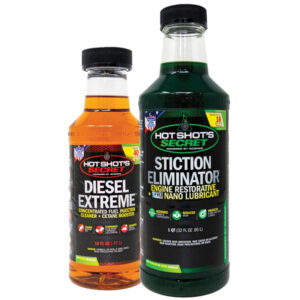
Additionally, understanding the different types of DPF regeneration — passive, active, parked and forced — can help owners manage their vehicles more effectively. Hot Shot’s Secret products, such as the Diesel Duo, containing Stiction Eliminator and Diesel Extreme, have proven effective in resolving diesel-related issues, saving customers from costly repairs and improving overall engine performance. Scientifically tested and field-proven, these additives offer a cost-effective solution to reduce DPF regens, saving both time and money in diesel maintenance.
What Is Crankcase Pressure?
As the primary part of your vehicle’s engine, the crankcase serves as the housing for several components, including the crankshaft, cylinders and pistons. One common issue is that the cylinders and pistons within the crankcase may build up too much pressure when the engine runs. As the piston moves down a cylinder, the pressure increases by reducing the amount of space in the crankcase. However, as one piston moves down, the other will move up. Usually, this design keeps the pressure equalized. However, too much pressure can build up, causing oil to leak through the seals
Another common contributor to crankcase pressure is called engine blow-by, which stems from leakage beyond the cylinder’s rings.
Possible Reasons Behind Blow-By
Blow-by occurs in 3.0-liter Duramax diesel engines when the pressure of the air and fuel within the cylinder exceeds that of the oil pan. As the pressure increases, it looks for a way out, and this excess can lead to gas leakage past the piston rings and into the crankcase.
A high level of blow-by suggests potential issues with worn, damaged or stuck piston rings or damage to pistons or cylinders.
Symptoms of blow-by include engine misfires or rough idling. One of the most noticeable signs is the release of white smoke, which you will see around the oil-fill tube or valve cover opening. Lay the lid upside down over the tube or valve opening to check for extreme crankcase pressure. If it pops off immediately, you can confirm that the issue is too much pressure causing blow-by.
Remedies for 3.0 Duramax Engines Experiencing Excess Pressure
If you observe white smoke, there’s no need for alarm. However, you need to remedy the issue by using a supplement to enhance lubrication and mitigate sticking to the piston rings. Consider adding our Stiction Eliminator and FR3 Friction Reducer to your 3.0 Duramax engine to provide the proper treatment.
Furthermore, selecting the appropriate oil and additives can help reduce excessive blow-by and crankcase pressure accumulation, preventing further issues. Our Green Diamond 0W-20 Light Duty Diesel Motor Oil is a 100% fully synthetic oil formulated for Duramax 3.0 engines. It uses FR3 Nano Technology and special additives to protect engine surfaces against wear and viscosity breakdown.
Purchase Engine Treatments or Contact Hot Shot’s Secret’s Team of Experts
If you’re experiencing an issue not covered in this guide, contact our team of experts. Hot Shot’s Secret is proud to share our knowledge and help you identify the best products for your engine issues. You can also use our free diagnostic tool to input your information and gain more insight into your engine’s health. We produce a wide range of high-quality fuel additives and treatments that could prolong the life span of your vehicle and its components.
Contact us online to discuss your 3.0 Duramax engine issues and receive tailored suggestions. You can also shop our fuel and oil additives and engine treatments directly.